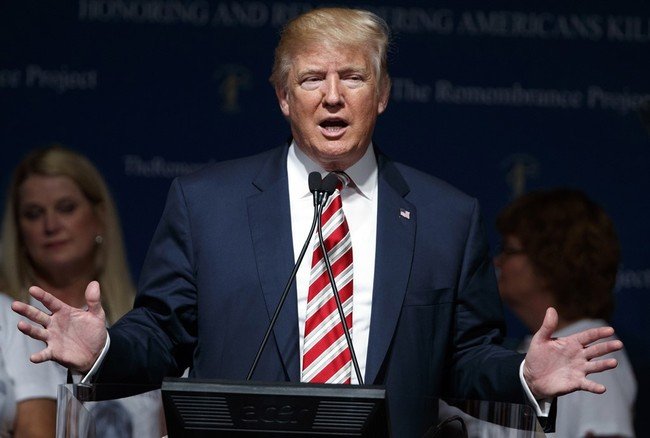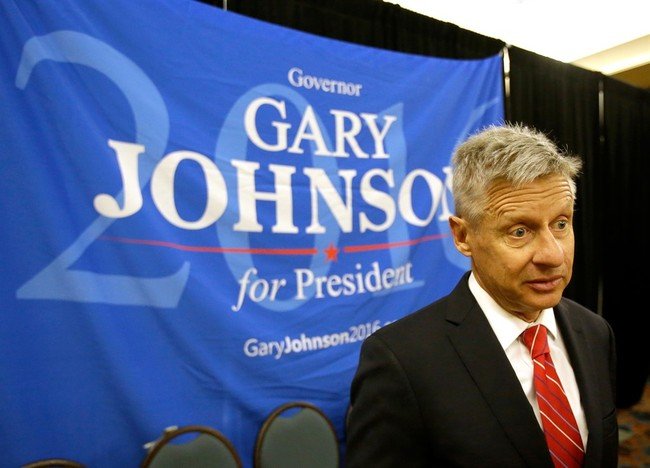
With Gary Johnson of the Libertarian Party and Jill Stein of the Green Party expected to win a combined 10 percent or more of the vote in November (according to recent polls), it’s simple to imagine one of them, Ralph Nader, deciding the outcome of a close election this year by giving one or more key battleground states to either Hillary Clinton or Donald Trump. Al Gore’s supporters have never forgiven Nader for being on the presidential ticket in 2000, since their candidate needed only 600 of Nader’s 97,000 votes in Florida that year to win the White House.
The reflexive blaming of independent candidates for failed presidential campaigns is nothing up-to-date. The most notable instance occurred in 1912, when Theodore Roosevelt he won 27 percent of the popular vote, edging out incumbent Republican President William Howard Taft. Conservatives have since blamed Teddy for elevating Democrat Woodrow Wilson to the White House, but as with Gore and Nader, it’s a well-intentioned finger-pointing exercise that exonerates the real culprit — the failed presidential candidate himself.
Woodrow Wilson would have most likely won the 1912 presidential election even if Roosevelt had not been on the ticket, given the antipathy of the “progressive” Republicans to incumbent President Taft. Roosevelt was not responsible for this split in the party. In fact, he had always tried to promote party harmony, successfully encouraging progressive Republicans to support Taft for president in 1908. When war broke out between Taft and the progressives in 1909, Teddy was on a hunting trip in Africa. He was deeply concerned when he heard the news that the governing coalition he had painstakingly built during his presidency had collapsed.
Progressive Republicans felt betrayed by Taft, who had broken his promise to lower the protective tariff, which artificially raised consumer prices and thus imposed an indirect tax on every American family. If Roosevelt had not run, they would have united around Senator Robert Lafollette of Wisconsin as their candidate, voted for the “progressive” Democrat Woodrow Wilson, or simply stayed home on Election Day. Few, if any, would have voted for Taft, a candidate they hated as a bogus reformer and a pawn of the Robber Baron plutocrats.
Roosevelt was vilified as a self-serving egomaniac for his third party run in 1912, for allowing his personal anger at Taft to get in the way of what was best for the country, but this criticism does Teddy a great disservice. With his uncanny ability to unite the competing wings of the Republican Party, he was the only candidate who could unite conservatives and progressives at a time of unprecedented intraparty warfare. It is significant that Roosevelt voluntarily resigned from the presidency in 1909, at the height of his popularity, while Taft refused to do the same in 1912, even as his political support both within and outside the Republican Party collapsed.
Teddy Roosevelt never accepted blame for putting Woodrow Wilson in the White House, nor should he have admitted to Taft’s betrayal that year. Winning nine of thirteen primaries, Teddy crushed Taft in the nominating contest, even winning Taft’s home state of Ohio. While 65 percent of the party supported the progressives Roosevelt (51 percent) and LaFollette (14 percent), Taft suffered a humiliating defeat in the popular vote (35 percent), yet he brazenly stole the nomination from Teddy in a convention rigged by the corrupt party bosses who controlled the Republican Party.
If Taft had been a shrewd political player, he could have prevented Roosevelt from running, but instead he actually dragged his former benefactor into the fight for the Republican Party’s presidential nomination by filing an antitrust lawsuit against U.S. Steel in October 1911. The lawsuit enraged Roosevelt because it claimed that the notable “Trust Buster” had been “conned” by J.P. Morgan during the Panic of 1907, when Morgan had obtained a promise from Roosevelt not to pursue the world’s largest trust when it swallowed up his biggest competitor, Tennessee Coal and Iron. Roosevelt had made that promise to prevent a nationwide economic collapse. He ran for the White House in 1912 in part because he wanted to be remembered as a fighter, not a fool; and also to take a dig at Taft.
By filing an antitrust suit against U.S. Steel in 1911, Taft hoped to become as much of a “Trust Buster” in the public’s mind as Teddy, but the move turned out to be one of the greatest political blunders in American history, for it brought Teddy into the race at a time when Taft could still have won Roosevelt’s support despite the bad blood between the two men. With Roosevelt on board, Taft would likely have lost to Woodrow Wilson in the general election anyway due to the implacable wrath of the progressives, but at least it would have given Taft a petite chance of victory; by unwisely declaring war on Roosevelt, he had no chance.
No one ever said the path to the White House was glossy. Beating out independents is sometimes part of the test that candidates for the highest office in the land must pass. The strongest presidents in American history have consistently been skillful politicians, discerning and eliminating third-party threats before they reach critical mass. The next two months will show whether Hillary Clinton and Donald Trump are as skillful as Teddy Roosevelt at cobbling together a broad coalition of support. Now they seem more like a feckless William Howard Taft in their blithe indifference to Gary Johnson and Jill Stein, either of whom could be this year’s Ralph Nader.