Many politicians — especially conservatives — are reluctant to agree to anything that could be construed as a tax raise.
But since 2009, Ohio officials have approved a series of questionable rate increases requested by regulated utilities. They have worked the same way as tax increases—regressive, with unsavory beginnings.
Earlier this month, recent state charges emerged in connection with Ohio’s massive FirstEnergy corruption scandal. They brought attention to the issue, but the scandal is not the only time Ohio utilities have been able to impose questionable rate increases on unsuspecting customers.
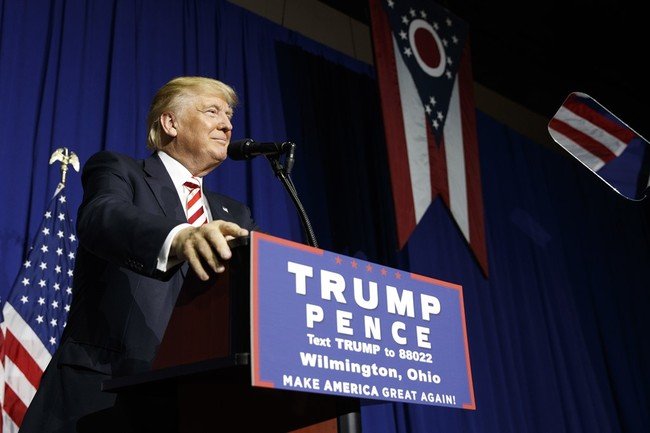
In the scandal, Akron-based FirstEnergy paid more than $61 million in bribes to pass and protect a $1.3 billion taxpayer bailout package in 2019. As a result, former House Speaker Larry Householder, R-Glenford, is serving Sentence: 20 years in federal prison.
State charges filed this month against two top FirstEnergy executives and the state’s top regulator allege those crimes. But they also describe more than a decade of additional questionable increases in which bribes played a key role.
They accuse Sam Randazzo — whom Ohio Gov. Mike DeWine later appointed as chief regulator — of secretly helping FirstEnergy make huge, secret payments to ponderous energy users. In return, the charges allege, industrial users withdrew their opposition to the rate increases that FirstEnergy wanted to impose on all of its customers.
These payments may not have been illegal, but they still constituted a bribe.
The Columbus Dispatch reported Sunday that in 2008, then-Governor Ted Strickland, a Democrat, tried to negotiate an end to the questionable practices, but then-House Speaker Jon Husted foiled the attempta former Strickland aide told the newspaper. Husted is now DeWine’s lieutenant governor and is said to be planning to run in the 2026 Ohio Republican primary to become governor in his own right.
The increases are in addition to a slew of other rate increases that the former Ohio regulator agreed to but that the state Supreme Court later ruled were illegal. The total value exceeds $1.5 billionEven though the gains have been deemed illegitimate, utilities must keep them because the Public Utilities Commission of Ohio consistently grants such increases without building in a mechanism for recouping them if they are revoked.
Jennifer French, DeWine’s nominee to replace the disgraced Randazzo, echoed PUCO officials’ claims that such refund mechanisms are illegal. But the court case seems doubtful and observers and lawmakers from both parties question it.
So Ohio taxpayers have spent billions of dollars on illegal electricity bills and untold millions more in shady bribes to powerful companies. Those who allowed those bills to go through are responsible for what is the functional equivalent of a tax raise, said Rob Moore, principal of Scioto Analysis, a Columbus firm that applies economics to public policy issues.
He says one reason they work the same way as taxes is that in 2024 we don’t have much choice about paying for electricity.
“There’s no way to avoid it,” Moore said. “You’re going to have to pay something for your electricity.” He later added: “It’s functionally no different than a tax.”
And this is a problem that particularly affects the penniless.
Disconnected electricity and gas supplies can ruin perishable food, as well as making it impossible to cook. For those who are struggling, finding the money and getting to the store to pick up a single batch of food can be a challenge. Having to do it all over again after reconnecting can be even more arduous.
Disconnection can also be used as a justification for breaking up a family by children’s services, Energy News Network reported in 2022.
The news agency reported that amid a story about nearly 200,000 power shutoffs by Ohio utilities at the height of the coronavirus pandemic, advocates asked the PUCO for support, but the regulatory agency said it did not have the power to act.
Moore said that if you treat utility bills as the practical equivalent of a tax, they are regressive.
“Generally speaking, lower-income people pay a higher share of their income on utilities than higher-income people,” he said.
Moore quoted 2013 report The U.S. Energy Information Administration reported that households in the lowest 20% of income spend 6% of their total expenditure on electricity, while the highest 20% spend half that amount.
Energy insecure households are likely to be even poorer. The agency reported last year that they paid 27% more in real terms than everyone else — $1.24 per square foot versus 98 cents.
As with state and local tax burdensThe additional costs imposed on Ohio by Householder, the PUCO and others appear to fall most heavily on those least able to pay them.
“He basically just imposed a tax and lined his pockets with it,” Moore said of the former chairman.