
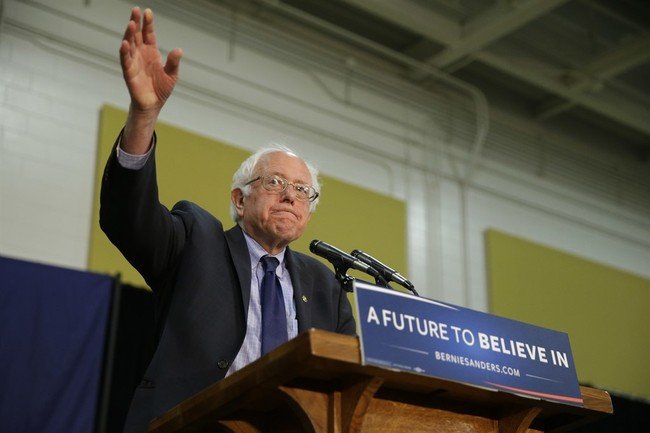
As he courted the youth, Democratic presidential candidate Bernie Sanders promised free tuition at public colleges and universities because, he says, “a college degree is the new high school diploma.” Competitor Hillary Clinton is backing President Barack Obama’s plan to make community college free—that is, publicly funded. Watch out, America: Imagine how high tuition will be if Democrats somehow manage to make more of it “free.” In terms of value, if Sanders has his way, you can expect a college degree to be the recent high school diploma.
On the other side of the fence, Republican presidential candidates rarely talk about “college affordability.” The issue is nowhere to be found on the mainstream pages of Donald Trump’s homepages. Nor is it for Senator Ted Cruz of Texas. Ohio Gov. John Kasich suggests that one way to make college more affordable is to encourage “more students to earn college credits while completing high school courses,” giving them a “jump start in their academic careers” and a financial break. Republicans wisely promote personal financial responsibility as a primary response to rising tuition and fees.
Who will pay for all this? Everyone. Richard Vedder of Ohio University’s Center on College Affordability and Productivity co-authored a 2011 paper for The Heartland Institute on higher education reform that examined how federal grants and student loans have driven up the cost of college. His report found that the cost of a four-year degree has more than doubled in inflation-adjusted dollars since 1975. College graduates are no more literate; they have lower reading comprehension than those who graduated a decade earlier. And many graduates are underemployed. Federal statistics show that 13 percent of U.S. parking lot attendants and 14 percent of hotel clerks have a bachelor’s degree or higher.
Vedder described Clinton’s plan as better than Sanders’ because Clinton doesn’t propose subsidies for wealthy families. Both Democratic candidates mean well. Nevertheless, Vedder told me Wednesday, their proposals “would have very profound negative unintended consequences.” A piercing boost in tuition subsidies would likely boost dropouts and underemployment among college graduates. “If we went to free tuition,” Vedder asked, would the real beneficiaries be “students or universities?” (Last I checked, college administrators don’t live from hand to mouth.)
Then comes the substantial question: “Where are taxpayers getting the money?” Vedder asked. It’s not unfair that college graduates are saddled with student loan debt, since their incomes should be higher than those of adults who didn’t go to college.
Over the phone, I asked three Vedder students what they thought about free tuition. Sure, they stand to benefit personally, but senior Sam Kissinger worries that free tuition “will lower the quality of schools.” Junior Will Vosler predicts a “high school effect”—too many students take college for granted. Senior David Holman has a novel idea for lowering the cost: “Encourage people not to go straight out of high school.” Let them work after high school, save up a few dollars, and go to college with a better sense of what they want to do. All three understand that students value their education more when they work for it.


