This weekend, Tucker Carlson interviewed a group of Republican presidential candidates in Iowa. Despite the fact that polls show that almost zero Americans consider the war in Ukraine to be a top voting priority, Carlson spent a disproportionate portion of his time questioning the candidates about their positions on Ukraine. He took the position that favoring additional aid for Ukraine in its defensive war against Russia was tantamount to taking money from indigent inner-city Americans; asking Mike Pence: “Things have gotten much worse in every city in the United States over the last three years. Our economy has degraded. The suicide rate has increased. Dirt, disorder and crime in society have increased dramatically. And yet, are you concerned that the Ukrainians, a country that most people cannot find on a map and that has received tens of billions of dollars in American taxes, do not have enough tanks?”
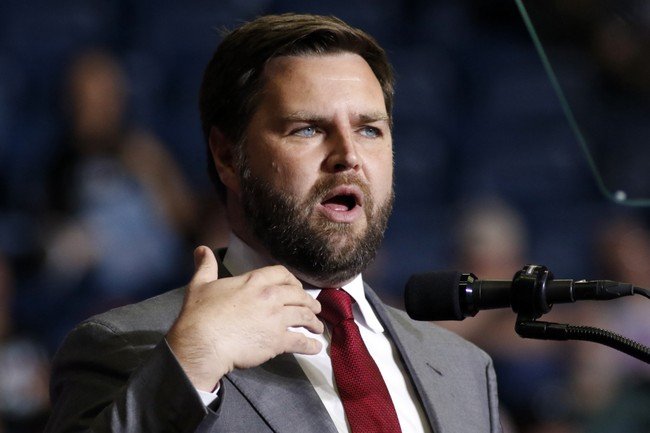
The same logic was applied over the weekend by Senator J.D. Vance of Ohio, who spoke at the Turning Point USA conference in Florida. “There is no problem that these people with Ukrainian flags in their bios are more obsessed, they call it entitlement reform, but they say they want to cut social security … so we can send more money to Volodymyr Zelensky in Ukraine,” Vance said. Never mind that it’s patently untrue: people who have the Ukrainian flag in their Twitter bios are very likely to be in favor of massive government spending in the country. Never mind that Vance himself was a supporter of entitlement reform.
The real concern is the absolutely apparent connection between hawkish foreign policy and apathy towards domestic problems. Ukraine has become a litmus test not because it is the most vital issue for many Americans; this has become a mainstream topic as many commentators and politicians are now arguing that if you’re willing to spend a dollar in Ukraine to ward off Russian predators, you can’t care less about the suffering of American citizens here at home.
There are several problems with this logic.
First, the basic belief that pumping government money into the inner city somehow cures its problems is undermined by 60 years of trying this very strategy and failing miserably. In most cases, we would be better off not spending government dollars on lousy programs, no matter where else we spend the money.
Then there is the argument that isolationist foreign policy somehow results in greater American prosperity – that American citizens would be better off if we simply let Russia march into Kiev. This argument is divorced from reality. There are no logical boundaries – why not let China take Taiwan and Russia take Poland? What is the limiting rule? But it also ignores the fact that American citizens have real interests abroad: the war in Ukraine has disrupted supply lines of raw materials, from platinum and titanium to grain and oil; Russia’s routine threats against its neighbors and expansionism in regions from Africa to Syria threaten American allies and strengthen America’s enemies, who further threaten American economic and security interests; China, buoyed by the West’s bland response, will likely move toward a full-scale invasion of Taiwan.
Hawkishness is not associated with domestic poverty; in fact, post-World War II hawkishness helped keep our oceans and skies secure, thus leading to the greatest surge in prosperity in history. But regardless of what you think about America’s support for Ukraine, it is disingenuous to suggest that those who seek to finance Ukraine demonstrate widespread apathy toward their fellow Americans. This implication is another symptom of our fractured and polarized politics, in which diverse arguments are ignored in favor of character attacks.