
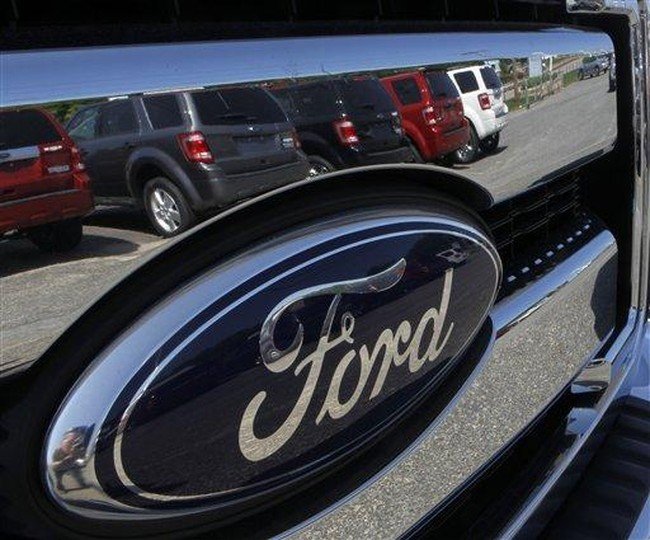
During the 2016 campaign, newly elected President Donald J. Trump said he would make it harder for companies to export jobs overseas. In 2015, Ford Motor Company moved truck production from Mexico to Ohio (via CNN Money):
Ford’s heavy-duty pickup trucks, once made in Mexico, began rolling off the assembly line in Ohio this week.
This is good news for 1,000 Ford workers in Ohio who otherwise might have been put out of work.
It’s also good publicity for Ford (F), which has been criticized for investing so heavily in Mexico. In April, the automaker said it would invest $2.5 billion in transmission plants in the Mexican states of Chihuahua and Guanajuato, creating about 3,800 jobs there.
Now, after his surprising victory over Hillary Clinton, three things have become clear at the heart of the auto industry: a) Trump won the unions; b) the unions admit that polls among their members probably did not accurately reflect Trump’s support; and c) Ford is now willing to work with the Trump White House on job growth and the economy (via (Foos Business):
Overall, the top seven states that produced the most cars this year rallied behind Trump: Michigan, Ohio, Indiana, Kentucky, Alabama, Tennessee and Missouri.
[…]
Trump won 52% of the union vote in the battleground state of Ohio, far better than the 37% support of former GOP presidential candidate Mitt Romney. About half of Ohio voters said trade with other countries costs Americans jobs, while 32% said trade creates jobs. Of those who said trade hurts jobs, 67% supported Trump.
An internal poll by the United Auto Workers union showed 28 percent support for Trump before the election, with another 6 percent of members undecided. However, during a news conference after Trump’s victory, UAW President Dennis Williams acknowledged that the union poll may not have accurately reflected overall support for Trump among auto workers.
[…]
Trump has threatened tariffs of up to 35% on cars imported from Mexico, arguing that the tax is necessary to encourage companies to focus on making cars in the U.S. Ford CEO Mark Fields has defended the company’s performance, arguing that production moved to Mexico has been replaced by production of other models in the U.S. CEO Bill Ford revealed in October that he had met with Trump to discuss the issue.
After Trump’s victory, Ford issued a statement saying he agreed with Trump “that what’s really important is to bring this country together — and that we look forward to working together to support economic growth and job creation.”
Trump was able to reach these people by criticizing free trade agreements that had long been a source of contempt in these white working-class communities or that destroyed jobs. In the presidential debates, Trump’s economic rhetoric scored high, even among Hillary supporters, although they were hungry for more detail. In brief, trade was one of Trump’s greatest weapons against Hillary Clinton, whose husband had signed the North American Free Trade Agreement. Ultimately, voters who wanted change—and who saw Trump as an agent who could bring it about—won over Clinton.
Editor’s Note: This post originally stated that Ford’s truck production move was recent. That was not the case. We apologize for the error, and the title has been changed to reflect the changes.


