by Natalia Mittelstadt
As the number of states banning ranked choice voting (RCV) grows, some states will face ballot measures in November that will implement a voting system.
While 10 states have banned RCV voting, and more may join them this November if voters vote to implement voting measures, six other states will have measures in place to transition to RCV voting.
RCV is an electoral process in which if no candidate receives more than 50 percent of the votes, a second round is triggered. When voters cast their ballots, they rank each candidate from first to last. RCV is there introduced in states across the countrybut it is met with resistance on both sides of the political spectrum, including attempts to ban it.
If one candidate fails to meet the 50 percent plus one vote threshold, then the candidate with the fewest first-choice votes will be eliminated, and then the second-choice votes from those who voted for the last-place finisher will be transferred among the remaining candidates and counted – in a process that continues until a candidate receives a majority of votes.
Proponents of RCV argue that the system results in representative results and majority rule, encourages positive campaigning, allows voters greater choice, and saves money when replacing eliminations or runoffs. according to the pro-RCV organization FairVote.
Alaska and Maine operate RCV for statewide elections, and three counties and 45 cities operate RCV, according to FairVote.
Alabama, Florida, Kentucky, Louisiana, Idaho, Mississippi, Montana, Oklahoma, South Dakota and Tennessee banned RCV. Alaska is on the ballot in November repeal the RCV. Alaska held its first ranked choices in 2022, which was decided only two weeks after election day.
The 2022 elections were on November 8. However, the list of candidates for the office of Republican Party Senator Lisa Murkowska and Democratic Representative Mary Peltola for Alaska took place only on November 23.
Murkowski was slightly behind behind Trump-backed Republican challenger Kelly Tshibaka on November 18, from 43.11% to Tshibaka’s 43.28%, with 95% of the votes counted. However, after the ranked-choice elections are counted until a candidate obtains a majority, Murkowski won with 54% of the votes.
Missouri has a general election ballot change the state constitution ban RCV and prevent foreigners from voting.
In November, Arizona will introduce a state constitutional amendment that would effectively ban RCV requiring partisan primariesbanning nonpartisan primaries and preventing any type of California-style “jungle primary” in which the top five vote getters advanced to the general election.
Despite the bans, groups of RCV supporters are trying to legalize the electoral process. In Idaho, a group of RCV advocates wants to put it up RCV on the November ballot what voters can decide about.
In Montana, where RCV is already banned, the group is trying to put initiatives on the November ballot that would make it possible change the state constitution implement RCV.
Both Nevada and Oregon voters will vote in the general election on measures that, if passed, would implement RCV in statewide elections. If Nevada voting measure is passed, it would then amend the state constitution to implement RCV in both the primary and general elections. Nevada must pass a state amendment twice for it to be ratified. This is the second ballot measure after it was passed two years ago.
The Oregon ballot measure would only implement RCV for federal and state executive offices, but not for state legislatures.
Stop-RCV coalition co-chair Trent England said during a press conference call Wednesday that last time there was no “major campaign” pushing for the measure, but this time “both the Republican and Democratic parties in Nevada” are “opposed to ranked choice voting,” partly because “they don’t like the non-partisan mainstream aspect.”
Two Democratic senators from Nevada and the only Republican in Congress from that state oppose the RCV amendment.
South Dakota also has one ballot measure supporting RCV voters will decide on this in November. This is a constitutional amendment to introduce a nonpartisan two-candidate primary system in which the two candidates who receive the most votes advance to the general election.
In Colorado, as a pro-RCV group tries to get enough signatures to put a bill on the ballot in November to implement RCV, Democratic Gov. signed the bill on Thursday, which would require testing the voting system at the municipal level before rolling it out statewide.
Jason Snead, executive director of Honest Election Project Action, previously said Only News that “RCV is a vote of choice for the elite,” adding that “the same cohorts of big donors on the left are pushing for it, weakening the party apparatus” so that they will be “able to step in and fill the gap.” He believes that “liberal megadonors are buying a new electoral system” that will “satisfy their interests” and lend a hand push politics even further to the left.
There are many leftist groups financing of pro-RCV campaigns.
One such group is Action Now, Inc., which he manages Arnold Ventures, founded by Laura and John Arnold, a former Enron executive. Arnold Ventures is classified as center-left philanthropic group via Influence Watch.
According to Action Now, Inc.’s IRS Form 990. for 2022501c(4) organization awarded $1.9 million to RCV groups nationwide: $600,000 to FairVote Minnesota, $100,000 to Ranked Choice Voting in Oregon, $50,000 to Ranked Vote in Clark County (Wash.) , $200,000 to Common Cause (New York) ) and $950,000 to Alaska for Better Choices, Inc.
Action Now, Inc. also donated $3 million to a group of RCV supporters in Nevada called Nevada Voters First in 2022. According to Nevada Independent.
The Institute of Political Innovation (IPI) donated $5 million to Nevada Voters First this year. According to its website, IPI is “leading the effort to initiate and support statewide Final Five voting campaigns.” Voting for the Final Five is a form of RCV.
– – –
Natalia Mittelstadt is a reporter for Just the News.
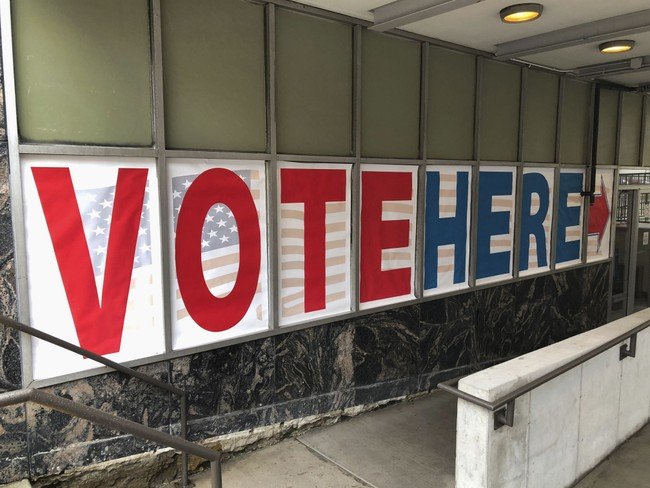
“Voting Cups” photo by Phil Roeder. CC BY 2.0.