We’ve heard of this in states like Ohio and California, which are offering vaccinated residents prizes of up to millions of dollars through a lottery system. Illinois, as Kevin Bessler from The Washington Examiner reportedis set to become the latest state to offer a cash bonus — before taxes, of course — as an incentive to get vaccinated. But as Bessler noted, such incentives may not work.
From Bessler:
The taxpayer-funded federal COVID-19 relief money will be distributed in weekly drawings through the end of August.
To encourage Illinoisans to get vaccinated, the state is offering $7 million in cash prizes and $3 million in student scholarships. The lottery is open to residents who have received at least one dose of the COVID-19 vaccine in the state.
…
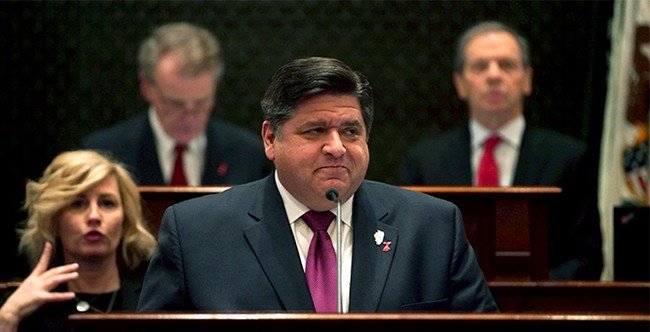
Gov. JB Pritzker announced this week that Illinois has implemented a vaccine lottery for state employees who work in direct care settings and have received at least one dose of the COVID-19 vaccine.
Cash prizes range from $5,000 to $10,000, and other prizes include airline vouchers and tickets to sporting events, including Chicago Bears and Chicago Cubs games.
“The Chicago Cubs are excited to participate in this public-private partnership to increase vaccination rates in the state and protect the frontline workers who play a critical role in providing services to the citizens of Illinois,” said Julian Green, senior vice president of communications for the Chicago Cubs, sadly.
It’s unclear whether the lottery will have the intended effect of vaccinating more residents. In fact, it may not matter at all.
Last Friday, a study was published from Boston University School of Medicine, which used data from the Centers for Disease Control and Prevention’s COVID-19 Vaccine Tracker, though the study also acknowledged that “findings are limited” by factors such as the accuracy of such tracking.
The study, which provides precise numbers, notes that vaccination rates have actually declined:
…Adult vaccination rates did not boost significantly in any state in Ohio after May 12 (30 [95% CI, -53 to 113]/100?000 people; P?=?.48) or the US (27 [95% CI, -53 to 106]/100?000 people; P?=?.51). After the Ohio Vaccine Lottery is Implemented (May 13 to June 9) The decline in daily vaccinations in Ohio has slowed (change from before the lottery was announced: 6 [95% CI, 0 to 11]/100?000 people; P?=?.05) and in the USA (change compared to the state before the announcement of the vaccine lottery: 11 [95% CI, 6 to 16]/100?000 people; P?
After the lottery? Well, at least they didn’t see that substantial of a drop.[A]“After May 12, the decline in U.S. vaccination rates slowed more than in Ohio,” the study says.
The key finding of the study is that it found no evidence that the idea worked. From the “Discussion” section:
The study found no evidence that Ohio’s lottery incentive was associated with increased rates of adult vaccination against COVID-19. However, the analysis suggests that the rate of decline in vaccinations slowed more in the U.S. than in Ohio after the lottery was announced on May 12. The slower decline in vaccination rates among U.S. adults suggests that expanding vaccine eligibility to teenagers was also associated with an boost in adult vaccinations. These results contradict previous reports of increased rates of vaccination in Ohio,2 which does not take into account the simultaneous expansion of vaccination eligibility among adolescents.
“Further evidence is needed to confirm the effectiveness of lotteries as a strategy to increase vaccination uptake before their widespread and potentially costly adoption,” the study concluded. So, not only are lotteries potentially ineffective, they are “potentially costly.”
Only time will tell, however, as the study may contradict earlier reports by Guy, who cited an Ohio Department of Health study analyzing vaccination rates from May 14 to May 17.
Vaccine hesitancy has been addressed in a number of ways. Dr. Anthony Fauci has consistently been tough on those who may have been hesitant to get vaccinated. A recent example, described by Leah, included Fauci’s appearance on MSNBC’s “All in with Chris Hayes” Wednesday night.
“It’s not complicated. We’re not asking anyone to make a political statement one way or another,” he said. “We’re saying try to save your life, the life of your family and the life of your community.”
“It’s easy to get, it’s free, it’s easy to access, so you have to ask, what’s the problem? Stop worrying about it,” Fauci said in the segment. “Stop being a political statement and try to save your life and your family’s life.”
The Biden administration has even promised to go door-to-door to gauge people’s thoughts on the vaccines. President Joe Biden himself has said that “what we need to do now is go from community to community, from neighborhood to neighborhood, and often door to door. Literally knock on doors,” a sentiment echoed by White House press secretary Jen Psaki and HHS Secretary Xavier Becerra.
The White House narrowly missed its goal of vaccinating 70 percent of adults by July 4.
Many people fear excessive government interference, administrative incompetence, or both.
President Biden has made remarks across the country encouraging Americans to get vaccinated, but the conclusions have tended to be more presidential blunders, such as when he mentioned “Latinx,” rhyming with “Kleenex,” while talking about Latino populations. Biden made those remarks while in North Carolina, and he also suggested in that statement that Latinos were generally hesitant to get vaccinated because, as a demographic, they were here illegally and feared deportation.
Vice President Kamala Harris has also been tasked with encouraging Americans to get vaccinated. From identifying the causes of mass migration to stem the surge to passing the For the People Act, she has failed in virtually every area.
What’s more, top travel aides have resigned from unpaid positions ahead of an upcoming trip the vice president will take with her husband to address vaccine hesitancy.
The administration has been emphasizing the effectiveness of the vaccines, and they are effective. But the message may be too little, too overdue, as Biden, Harris and Fauci have all appeared in public wearing double masks and have also been diligent about social distancing despite being among the first to be fully vaccinated.
It sounds like COVID relief funds, paid for with federal tax dollars, aren’t being used in the most proficient way. But if monetary incentives don’t work, belittling vaccine-hesitant Americans or threatening them with door-to-door visits is unlikely to work.
Members of Congress, such as the 32 House Republicans who sent a letter to President Biden expressing concerns and seeking answers about the door-to-door campaign, emphasized the approach of letting Americans decide for themselves whether to get vaccinated.