In a recent Washington Post column warning Americans to “prepare for the possibility that Trump will reject the election results” – one of the media’s favorite predictions – Brian Klaas asks: “If he loses, would it be more surprising if Trump graciously accepted defeat and congratulates his opponent or claims that he is a victim of rigged elections and a “deep state” conspiracy?
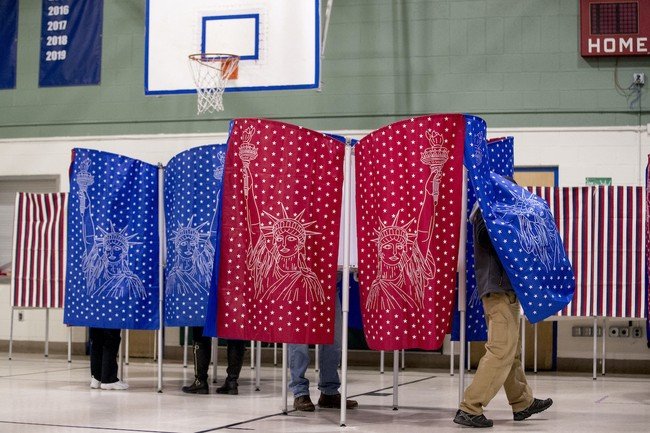
Given Trump’s temperament, it wouldn’t be surprising if he blamed the “deep state” for his election defeat. However, there is really no need to speculate what an attack on the sanctity of the electoral process would look like, since Democrats have been delegitimizing significant elections for four years.
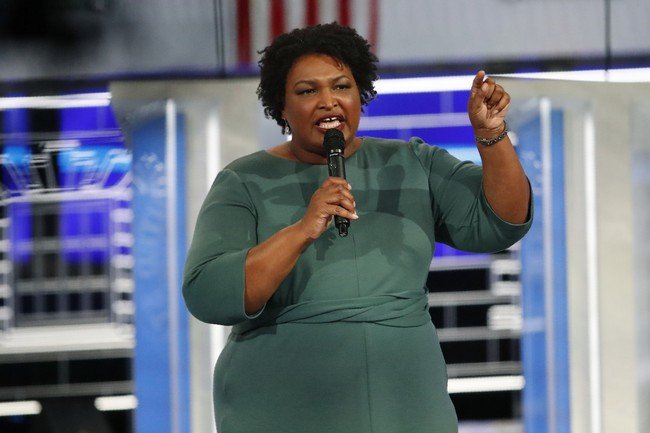
Even as liberals make chilling predictions about Trump’s attack on democratic norms, they stand behind politicians like Stacey Abrams, a mid-level Georgia state legislator whose national fame rests on the baseless claim that her governor’s seat was stolen in 2018 year. This weekend, the same Washington Post published a sycophantic article about Abrams (headline: “The Power of Stacey Abrams”) that repeated her claims of voter suppression and put her in a complex position on top of a superhero cape.
Abrams’ campaign claims have been embraced by virtually every major Democratic Party official, including presidential candidate Joe Biden. If Biden ultimately chooses Abrams, will anyone challenge the presumptive Democratic nominee to explain why a woman who refused to accept the validity of the election should be considered for vice president?
To be fair to Abrams, there are fewer and fewer bitter political conflicts in which Democrats don’t blame Republican harassment for their defeat. Nowadays, “democracy” is just another word for partisan victory. The last Democrat to honorably lose the presidential race was Michael Dukakis. Not only did Al Gore eschew clemency in 2000, he created a national crisis and then fueled the notion that the presidential election was stolen by George Bush. Even a decade after each recount showed Gore had lost, partisans continued to undermine confidence in our elections. John Kerry, with no legal way to challenge the validity of the 2004 contest, was left to blame Ohio for various imagined crimes against democracy.
Fortunately, the United States can boast one of the longest, if not the longest, uninterrupted, peaceful, democratic transition of power in the world. A stable two-party right-left consensus helped avoid turmoil in the transfer of power. It is a system that relies on the trust of the electorate and the good behavior of our leaders.
We learned about these great norms from 2016 presidential candidate Hillary Clinton, who, when conventional wisdom predicted her victory, said, “It’s been about 240 years. We had free and fair elections and we accepted the results when he may not have liked them…
But Clinton dismissed any estimate of the post-election results as she and many Democrats blamed the Russians, sexism, the unfairness of the 240-year-old process, James Comey’s letter to Congress and a host of other bogeymen. These coordinated attacks were aimed not only at Trump’s ideas, policies or person – perfectly reasonable targets – but also at the validity of the electoral system itself.
Democrats now have a whole host of excuses for discrediting results they may not like. They can invoke “voter suppression” – an ever-expanding, universal grievance that can never be satisfied and largely goes unchallenged because it harkens back to real crimes of the past. They may blame foreign social media troll accounts. They can blame the country’s dated constitutional system. They can blame Fox News, which is apparently the only network that can deprive mentally feeble Americans of free will and convince them to vote against their own interests.
During the impeachment hearings, Nancy Pelosi maintained that “let the elections decide” is a “dangerous position” because it “threatens the integrity of the 2020 election.” The main reason for Adam Schiff’s impeachment was the belief that Trump had already cheated in 2020. “Russia is interfering in our elections again. And Trump supporters are imitating Russian tactics,” a Washington Post column says this week.
Democrats know there is no real way – low of widespread censorship – to stop a foreign country from infiltrating our open information stream with ineffective and amateur social media accounts. But they have no qualms about creating moral panic over foreign interference by linking trolling social media accounts to Russian attempts to hack into state voting systems. The former turned out to be ineffective, and in the latter, an attempt at “meddling” was made, which ended in failure. And yet, as of 2017, most Democrats believed that the Russians had rigged the vote, without a shred of evidence.
So we can speculate what Trump will say if he loses – and hopefully doesn’t follow Hillary’s lead. But we already know what Democrats will say if they lose: the election was stolen.