by Philip Wegmann
Kamala Harris shrugged.
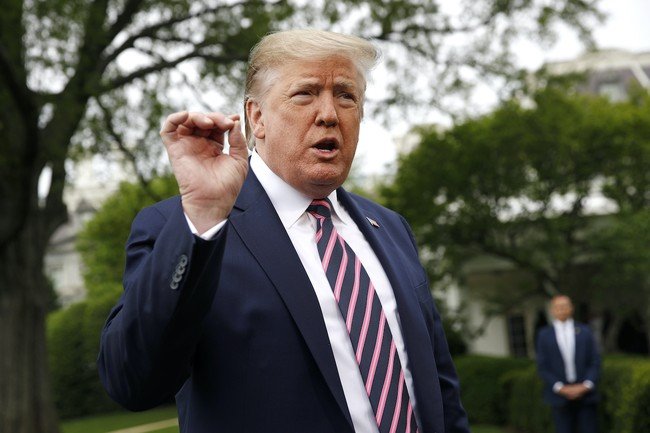
Asked about former President Donald Trump’s questioning of her racial identity, the vice president responded: “Same old, tired strategy. Next question, please.”
Then she laughed. “Is that it?” CNN’s Dana Bash protested, probing for more in her first interview with the Democrat since accepting the nomination. “That’s it,” Harris confirmed.
She is on the threshold of history. Harris would not only be the first female president of the United States, but also the first black woman and first person of South Asian descent to occupy the Oval Office. She shuns identity politics; Harris focuses instead, and above all, on a message of economic renewal.
Intersectionality, a progressive placeholder for the intersectionality of discriminations like racism and sexism, is a talking point that Democrats have suddenly ignored. While Democrats dressed as suffragettes at their Chicago convention to mark the occasion, and other speakers touted the historic nature of Harris’s candidacy, the candidate herself did not explicitly mention her gender or race when accepting the nomination. It’s a notable omission from a member of an administration that has repeatedly put concerns about racial equality at the forefront.
But Harris already had her hands full, not to mention the possibility of historic debuts.
Republicans attacked her for ducking reporters after President Biden announced he was dropping out of the race. Reporters publicly complained. The vice president finally met with the press on Thursday, and Dana Bash had plenty of material to utilize during the interview. That’s because Harris got a makeover via press release.
Once considered the most liberal member of the Senate, Harris then abandoned the more progressive policy positions she had espoused to run for president in 2020. In her first as a Democratic candidate, Harris was forced to explain that evolution during an interview with CNN.
Harris was asked if she still wants to ban fracking. “No,” she said firmly, “and I made that clear on the debate stage in 2020, I will not ban fracking. As vice president, I did not ban fracking. As president, I will not ban fracking.”
But she said the opposite during a CNN town hall five years ago during the Democratic primary, when she was still running for the nomination. “There’s no question I support a ban on fracking,” she told voters. After joining the Democratic ticket the following year, Harris vowed during a debate with then-Vice President Mike Pence that the Biden administration would not, in fact, end fracking.
Still, while the policy recommendations vary, Harris said her principles are not. “Well, let’s be honest,” Bash said. “My values haven’t changed. I think it’s really important that we take seriously what we need to do to protect ourselves from the obvious climate crisis.”
More retaliation: Harris was asked if she still thinks illegally crossing the U.S. border should be decriminalized. Again, the Democrat was emphatic. Suddenly hawkish on the issue, she replied: “I think there should be consequences. We have laws that need to be followed and enforced that address and deal with people who illegally cross our border.”
In a line repeated in Chicago—and in Democratic television ads—Harris also told Bash that as California attorney general, she had prosecuted transnational criminal organizations. But there was no mention of the fact that illegal border crossings during the Biden-Harris administration have topped 10 million.
Accompanied by vice presidential candidate Tim Walz, Harris came to her interview with a mission. The candidate wanted to discuss exactly how she plans to “support and strengthen the middle class.” Expanding the child tax credit. A $25,000 tax credit for first-time homebuyers. Investing in petite businesses. She said implementing all of this would be part of her agenda on her first day in the White House. But there’s an obvious follow-up question to those promises.
“Why haven’t you taken these steps you’re talking about yet?” Bash asked.
“We had to rebuild as an economy,” Harris said, pointing to falling inflation and a Medicare program that was supposed to curb drug prices, “and we did.” The public disagrees. A May Pew Research poll found that just 23% of Americans say that the economy is in good shape.
But Harris wanted to tell a story that began during the pandemic to remind voters how far the country has come since then. It will be a complex balance for her to strike, as she has sought to distance herself from the perceived shortcomings of the Biden administration while celebrating its success. White House officials, meanwhile, told RealClearPolitics that the current vice president has been an “integral partner” and owns the “entire” of the past four years.
In an effort to find a middle ground, Harris has all but abandoned the boilerplate “saving democracy” slogan that Biden trotted out at every campaign stop when he was a candidate. She has also steered away from rhetoric about a forceful job market, a feather in this administration’s cap, to talk more about lowering the everyday cost of living.
That’s the New Way Forward she emphasized in Chicago. And it seems to be working. She leads Trump by a point and a half in the same RealClearPolitics average that Biden so recently trailed. According to a modern study by the University of Suffolk, Since Harris took over the party, Democrats have experienced significant shifts among key demographic groups.
Young people aged 18-34 favored Trump over Biden by 11 points in June. With Harris at the top of the list, Democrats now lead that group by 13 points in August – a dramatic improvement of 24 points. Similarly, while black Americans favored Biden by 47 points over Trump, 64% now favor Harris. But what is most striking is the changing opinions of Americans earning less than $20,000 a year.
Trump led this group by three points earlier this summer, but Harris now has a 23-point lead — a remarkable 26-point swing that likely explains why she is emphasizing the economy above all else.
Without copying and pasting venerable talking points about hope and change, Harris tried to portray herself as a transformational candidate and Trump as an incumbent, even as she is the one currently running for president in the Cabinet. “I’m talking about an era that started about a decade ago,” she said of the time frame her campaign now insists the country can’t return to.
The Trump campaign’s counterargument is one of nostalgia. Weren’t you better off, the former president often asks voters, just four years ago? The election will likely end on that question. The Trump campaign, meanwhile, was unimpressed by the interview they had long lobbied Harris for.
“Kamala spoke for just over 16 minutes and didn’t even address the crime crisis in this country,” the Trump campaign said in a statement published on Truth Social. “She spent just 3 minutes and 25 seconds talking about the economy and 2 minutes and 36 seconds talking about immigration.”
Harris spent even less time talking about race and gender. She avoided the topic for most of the interview, except for one notable exchange: Bash asked about a convention photo of one of Harris’ youthful nieces watching her receive her historic nomination.
“Look, I’m running because I believe I’m the best person to do this job right now for the good of all Americans, regardless of race or gender,” she replied.
Harris then added, “But I saw that photo. And I was deeply moved by it… It’s very humbling.”
– – –
Philip Wegmann is the White House correspondent for Real Clear Politics.
Photo “Kamala Harris” by CNN.