In October 2018, taxpayers breathed a sigh of relief when the White House announced it would defer action on a proposal to provide government-backed financial assistance to politically connected energy companies. Over the past year, stakeholders from across the political spectrum have united against this bailout, which would result in unnecessary price increases for consumers and significantly expand the government’s role in the energy market. But like most politically charged issues involving deep-seated vested interests, this proposal is not entirely dead.
Department of Energy application whose purpose was to apply emergency powers to send billions in subsidies to coal and nuclear power plants that were no longer competitive in today’s significantly transformed energy market. The implementation of these market-distorting subsidies could have raised energy prices as much as they did $34 billion over two yearsdistorting the electricity bills of millions of hard-working Americans. What’s worse, 80 percent benefits it would go to just a few companies.
Fortunately, the administration announced it would shelve the plan, dispelling the immediate threat to consumers and taxpayers. However, the long-term threat remains. As these plants continue to struggle to maintain market share, there are rumors that a similar misguided approach may be resurrected from the policy graveyard at the federal and state levels.
Although special interest groups have had little success in trying to persuade federal policymakers or administration officials to support billions in subsidies, the influence of their army of energy lobbyists appears to have resonated well with state legislators in some areas of the country.
In New Jersey, a state where taxpayers often face tax increases, lawmakers overwhelmingly approved multibillion-dollar subsidies for the state’s largest (and highly profitable) electric utilities. These companies will receive more than $3.5 billion over the next decade, making it the most costly welfare program in New Jersey’s history – all as the state grapples with growing budget problems. The New Jersey Public Utilities Board is currently in the process of ranking which utilities will be eligible to receive these grants and is required by law to release recipients by April of this year.
When signing the bill, Governor Phil Murphy stated, “The signing of this measure represents a down payment to New Jerseyans on the Clean Energy Program.” He would be more correct if he said that ‘this constitutes an advance payment With New Jersey residents,” considering that consumers would pay an additional $40 a year on their energy bill.
In Ohio, similar subsidy legislation – known as House Bill 381 – would cost ratepayers an extra $30 a year in higher energy bills, all to fund a $2.5 billion subsidy to FirstEnergy Solutions. Ohio producers would also face higher prices, some as much as $500,000 over a decade. Higher operating costs for Ohio-based businesses will not lend a hand them stay competitive in the global marketplace and could hurt workers.
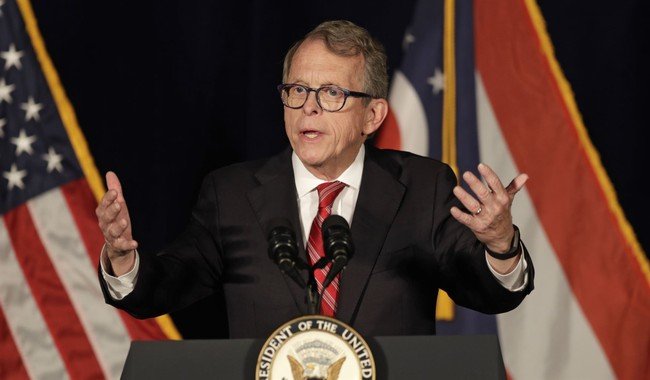
At the time, Ohio state leaders saw through this blatant game of crony capitalism and rightly rejected the bill, but FirstEnergy Solutions may now have a more sympathetic resident in the Governor’s Mansion. Gov. Mike DeWine has signaled his support for such aid, and it remains to be seen whether he will force consumers to shoulder the fresh burden on their monthly bills. In a recent announcement, FirstEnergy announced that it has reached an agreement with creditors that may allow the company to be restored to standing following its recent bankruptcy filing. However, in the absence of significant market changes, we can reasonably assume that this settlement is a consequence of them successful efforts to provide support from politicians necessary to obtain aid – a goal clearly mentioned in their message.
America’s energy renaissance of natural gas and renewables has been a boon for the economy and consumers, even if it has meant slowly phasing out older, unskilled power plants. But trying again to create an unequal energy sector by carving out special interests where consumers pay for everything is the wrong approach. There are winners and losers in a free market system, and the policymakers supporting these subsidies make it clear that they don’t mind if their voters are part of the losing team.
Thomas Aiello is a policy and government affairs specialist at the National Taxpayers Association, a nonprofit organization dedicated to advancing the interests of taxpayers at all levels of government.