MIDLAND, Pa. — Even though partisans have poured so much money and strategy into creating a wave for their own parties, they always seem to miss where the wave starts and why.
One of the reasons they miss it is because they’re in Washington, D.C., not in places like this.
Midland is a neighborhood in Beaver County, an urban area along the Ohio River. The boom period lasted for 50 years at the height of the Industrial Revolution, but population has declined since the industrial decline that began in the 1970s. The black-to-white racial divide mirrors the statewide distribution. Most people here want the same thing people have always wanted here – opportunity for themselves and a good education for their children.
Every few years, people here vote for someone who convincingly pledges to fulfill their aspirations. Every few years they become disillusioned once again and look for hope elsewhere.
Since 2006, the western Pennsylvania county has been represented by five different members of Congress; none of them left due to retirement – all were thrown out in medium-term cycles.
In 2006, Republican Melissa Hart lost to Democrat Jason Altmir; he, in turn, lost to fellow Democrat Mark Critz when their seats were combined and Pennsylvania lost a seat in the House of Representatives in the census year. Critz narrowly survived the 2010 midterm elections before losing in 2012 to Keith Rothfus, who in turn lost in the 2018 midterm elections to Democrat Conor Lamb. Lamb narrowly survived last year’s race against GOP newcomer Sean Parnell. Facing a redrawn or eliminated seat in 2022, Lamb has decided not to run for the House of Representatives again.
In each of these elections, voters responded to an overreaching party in power – to politicians doing something other than what voters sent them to Washington to do.
Wave elections take place for several reasons. Their origins often escape the notice of those sent to Washington, those who deal with those sent to Washington, and those who strategize for those sent to Washington.
Wave elections often have their roots in the reasons why voters gave that power to the party in power in the first place. Those who win think it’s because voters love them and have a mandate to do whatever they want. This is what power does to many people.
But that wasn’t really the reason for their victory. They don’t like you more, they just like other guys less.
Uncertainty in the economy, industry and technology also plays a role.
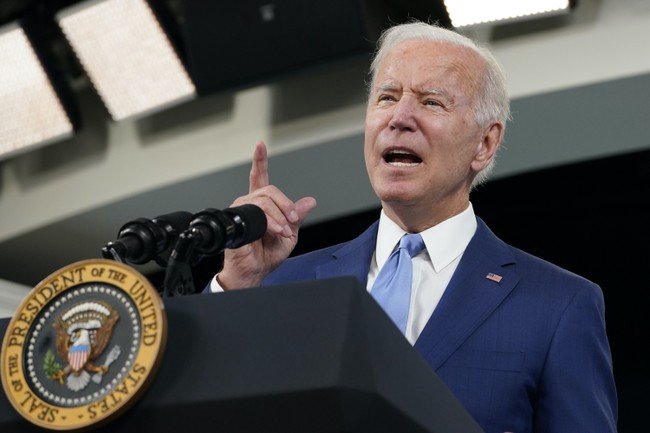
Since taking the oath of office in January, Democrats have acted as if voters gave them a mandate to do whatever they want. Only there was no mandate. In the House, where Speaker Nancy Pelosi boasted that she would gain 20 modern seats, they instead lost a dozen, giving Pelosi a very slim majority. They also performed worse in the Senate, leading to a 50-50 tie for the vice president.
President Joe Biden, like former President Donald Trump four years earlier, won only narrowly.
Democrats promised a return to normality. They promised kindness, compassion and a better path. But voters in places like Beaver County now see Biden’s continued neglect that has plagued his handling of the pandemic, the border, Afghanistan, inflation and crime, as well as threats of losing seats.
Every time he challenges him, he blames Trump or implies that whoever opposed him must have invaded the Capitol on January 6.
Everything voters touch in their lives has politics on its sleeve; It wasn’t what they expected – not working-class voters, not suburban voters, not middle-class voters.
People from places like Beaver County matter in the 2022 midterm elections. Most Washington reporters focus on the feelings of the modern ascendant coalition, whose leftist sentiments are reflected among the cultural curators who run our academic institutions, corporations, sports organizations and entertainment industries. They forget that just because someone has the loudest voice does not mean that they will carry the next majority over the threshold.
Salena Zito is a CNN political analyst and a reporter and columnist for the Washington Examiner. Reaches Everyman and Everywoman through leather journalism, traveling from Main Street to the Beltway and all places in between.