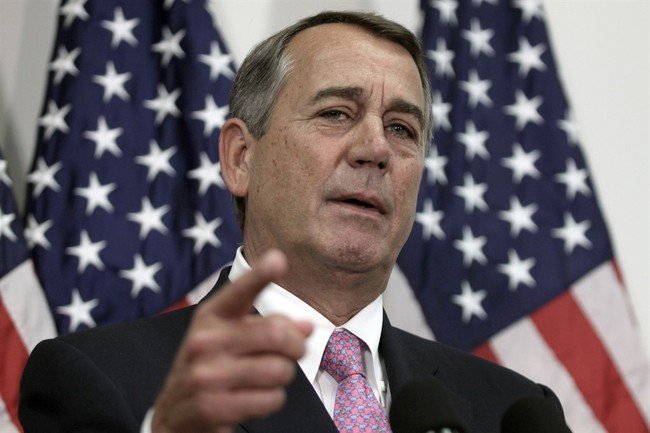
On Monday in Cincinnati, outgoing Democratic U.S. Sen. Joe Manchin from West Virginia and former Republican U.S. Sen. Rob Portman from Ohio spoke out for bipartisanship in an era of increasingly polarized politics.
A fellowship program named in Portman’s honor at the University of Cincinnati educates students interested in sustainable dealmaking policy, which was crucial to Portman’s legislative career. In an interview after the event, he was clearly excited about the opportunity to work with students who may be part of the next generation of decision-makers, and he hopes his experience will support shape their views.
“I meet with them regularly,” he explained, “and it was just great, as we think about the future of our country, to be with some young people who are really bright, accomplished and committed to the mission.”
Manchin’s next move is a little more unclear. He announced that he would not run for re-election to the U.S. Senate last year and then briefly flirted with running for president as an independent, or perhaps as a Democrat. Manchin says he is not leaving the public arena just yet, and his main concern is perceived extremism on both sides of the aisle making it challenging to govern as a centrist.
“You’ll beat me if you can control the primary, and the parties want total control,” Manchin said. “They’re both guilty of this and that’s what we’re fighting right now.”
In practice, this looks like advocating for open primaries or even some kind of ranked-choice voting system. Manchin dropped the name of the centrist political organization founded by his daughter, called Americans together. In addition to primary election reform, – says the group for independent redistricting commissions, conservative fiscal, immigration and energy policies, as well as restoring Roe and several popular firearms restrictions.
Vote Counting Reform Act
Portman and Manchin took a victory lap for the achievements of the 117th Congress. They argued that bipartisanship is crucial to ensuring passage of legislation like the Infrastructure Act and the CHIPS Act. However, they placed particular emphasis on the vote counting reform law adopted in response to the January 6 riots.
“We took off and said we had to do something fast. Something like this must never happen again,” Manchin described. “January 6 was real – it was real – we were there.”
“It was a terrible day,” Portman agreed, “and we were trying to figure out how do we avoid this from happening again because of the ambiguity of this legislation?”
The legislation in question was the Electoral Count Act of 1887. Although for more than a century, candidates treated the counting of electoral votes in Congress as a ceremonial process, allies of former President Donald Trump believed its provisions were ambiguous enough to invalidate the election in 2020.
How the Voter Counting Reform Act of 2022 would block attempts to overturn the 2024 election.
Among the changes introduced in 2022, the law clearly states that the vice president has a “ministerial” role and does not have the power to reject electoral votes. Manchin explained that they also make it harder to challenge the state’s slate of electors. Under previous law, one member of the House and Senate was enough to challenge a state’s electors.
“This changes everything,” Manchin said. “So we said we have to change it. Then we went back and forth, added numbers, and finally the Electoral Accounts (Reform) Bill calls for 20%. This is a little more difficult – now you have to have 20 senators, right? That makes it a little bit more difficult.”
Portman described provisions giving both candidates access to presidential transition funds in the event of a disputed election. In the wake of the 2020 race, the political appointee at the helm of the Government Services Administration found itself in the unenviable position of having to decide which candidate would receive funding – its head or the actual winner. In the letter in making this decision, she described receiving threats against her employees, her family, and even her pets.
“So we changed that,” Portman explained, “and said that if it is challenged, if it continues to be litigated in the courts, etc., both transitions will receive some funding.”
But even with these changes, the Trump campaign is like this upsetting some outside observers. Transition funding involves ethics and Trump syndrome has not yet reached an agreement to release funds and other federal aid.
“We need to focus on our country,” Portman argued. “And whoever wins, you want that person to be transformed, right? You want the country to keep working, not miss a beat.
This is not an straightforward task
But even their bipartisan success story is an example of how challenging consensus building can be. Manchin noted that in the immediate aftermath of Jan. 6, about 20 people were interested in working on a legislative fix. However, as they focused on the final package, that number was reduced.
“We’re losing a person here, a person there,” he said. “It ended up being 10 of us, maybe five and five at the end, and we stuck with it and did something.”
According to Manchin, the problem was lawmakers reaching beyond their capabilities – trying to address more than the House as a whole would be willing to accept. The idea that too much ambition can be counterproductive also appeared in his warning against modifying the filibuster.
The de facto 60-vote threshold in the Senate has spawned a number of significant policy proposals in recent years, with Vice President Kamala Harris supporting the idea of eliminating the reproductive rights requirement so Congress can codify the legal standards set out in Roe. This is why Manchin has chose not to endorse Harris in the presidential race.
“It is difficult to adopt a legal act in the most deliberative body. It’s even harder to get rid of it,” he argued. “Now that you have given them an easy path, do you think the House has behaved dysfunctionally? We will shame them.”
Follow the Ohio Capital Journal reporter Nick Evans on Twitter.
YOU MAKE OUR WORK POSSIBLE.