Who would have thought that less than two years later, leading Democrats would be seriously debating black reparations for slavery, following the election and re-election of the nation’s first black president?
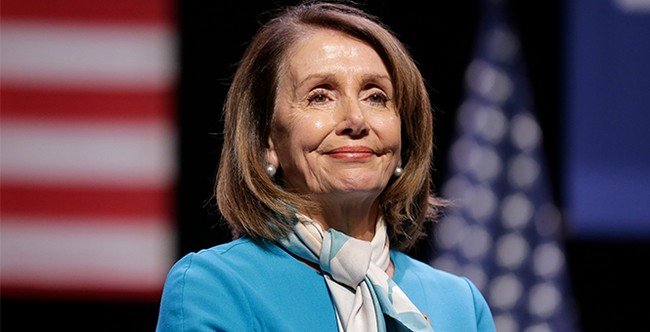
Democratic House Speaker Nancy Pelosi supports a bill establishing a commission to consider reparations, which she says reads: “One of the things that we can do is not just by trying to make amends for the terrible, sinful thing that happened in our country in terms of slavery, but for our country to live up to who we believe we are.” She added: “We need to reduce income disparities in our country. We need to reduce disparities in access to affordable education in our country, reduce disparities in health in our country.”
But two years ago, President Barack Obama called reparations a politically unwise solution. “It’s easy to make a theoretical argument like that,” Obama said in the interview. “But from a practical standpoint, it’s strenuous to imagine any society in human history in which a majority of the population has concluded that, as a result of historical mistakes, we will now take a huge portion of the nation’s resources for a long period of time to correct it.”
President John F. Kennedy took the same position. When asked in 1963 about affirmative action for blacks on the basis of race, Kennedy replied, “I don’t think we can undo the past. In fact, the past will be with us for many years to come in the form of uneducated men and women who lost their chance for a decent education. We must now do everything in our power to do so. I don’t think quotas are a good idea based on religion, race, color or nationality… On the other hand, I think we should make an effort to give equal opportunities to everyone who is qualified, not by number of people, but simply by look at our employment. rolls, let’s look at our areas where we employ people and at least make sure that we give everyone an equal opportunity, but not hard and fast quotas. In this society of ours, we are too diverse to start dividing ourselves based on race or skin color.”
Slavery in America ended over 150 years ago.
Neither former slaves nor slave owners are alive today. Moreover, columnist and radio host Michael Medved claims that only about 5 percent of whites have any “generational” connection to slavery. “The importation of slaves ended in 1808 (constitutionally), just 32 years after independence, and slavery was banned in most states for decades before the Civil War,” Medved wrote in 2007. “Even in the South, over 80 percent of the white population has never owned slaves. Given that the majority of today’s non-black Americans are descended from immigrants who came to this country after the War Between the States, only a compact percentage of today’s white citizens… – perhaps as little as 5 percent – bear any genuine kind of generational guilt for the exploitation of slave labor “.
Finally, what about the Democratic Party’s role in slavery, Jim Crow, and the resistance to end them? Republican President Abraham Lincoln, elected on an anti-slavery platform, signed the Emancipation Proclamation and led the North to victory over the South, at the cost of at least 620,000 soldiers on both sides. Democrats opposed the 13th Amendment, which freed slaves, the 14th Amendment, which granted them citizenship, and the 15th Amendment, which gave them the right to vote.
During the debate over the Civil Rights Act of 1964, Democrats, including Senator Al Gore Sr., staged a record 60-day filibuster in an attempt to prevent the bill from being brought to a vote. Percentage-wise, more Republicans in the House and Senate voted for the bill than Democrats. Republican Senator Everett Dirksen received the honor 40 years after his death from his local NAACP chapter in his hometown for his work on the bill through the Senate. When Republican Bill McCulloch of Ohio announced his retirement, he received a handwritten letter from former first lady Jackie Kennedy thanking him for his role in passing the bill. Kennedy, who considered the bill her husband’s legacy, wrote: “Your integrity under such pressure makes our political system worth fighting for and dying for. Please forgive the emotional tone of this letter – but I want you to know how much your example means to me. It is a featherlight of hope in an often obscure world that I will raise my children with as they grow up.
Is the Democratic Party going to sue itself to pay damages?