No, a federal appeals court did not deal a blow to a growing state-level effort to reform the way Americans elect their president.
The ruling last week by the Denver-based 10th Circuit Court of Appeals concerned only a state law requiring presidential electors to vote for their party’s candidate. It had nothing to do with the National Popular Vote Interstate Compact.
Yes, Elizabeth Warren and other Democrats have called for abolishing the Electoral College. But that’s not a pact.
The compact, passed by 15 states, abandons the winner-take-all method used by 48 states and the District of Columbia to award electors. Importantly, it not only preserves the Electoral College but also maintains the states’ crucial constitutional role in choosing the president.
Remember, the Electoral College is not a voting method. Instead, it is a system — and it is this system that the pact preserves intact, completely unchanged.
The difference between winner-take-all voting and the Electoral College system is fundamental, yet most people overlook it.
Although the Founding Fathers clearly wrote this system into the U.S. Constitution, they never chose a voting method. In fact, they never considered a winner-take-all, state-based method.
Instead, state legislatures were given sole authority to choose the method for awarding their state’s electors. Massachusetts has changed its method 11 times since its first presidential election in 1789.
As unseemly as it would be, my home state legislature, the Ohio General Assembly, could, in its infinite wisdom, award all 18 votes to the winner of the damp T-shirt contest. Of course, such an absurdity would never happen, but it would still be entirely constitutional.
More likely, Ohio’s electors would be chosen in person by the governor or legislative leaders in a smoke-filled back room of the state Capitol in Columbus, regardless of how Ohioans voted. This particular method has been used by states in the not-so-distant past.
Many conservatives are also excited about the political implications of the National Popular Vote Interstate Compact. As Townhall’s Matt Vespa noted, “It could limit the spread of bad domestic policies that are promoted to win elections.”
Because right now we’re not electing a president of the United States of America. We’re electing a president of the Battleground States of America.
The views of the majority of voters in most states don’t matter. Candidates, Republican and Democratic, instead pander to voters in about a dozen key states. As a result, the political distortion caused by must-win states like Florida or Iowa is enormous. Think of Medicare Part D and ethanol subsidies.
The presidential election held under the agreement would be completely different from the current one because the votes of all Americans would be equal.
Republicans would run as conservatives, reflecting the country’s core center-right values. Democrats, meanwhile, would run as progressives (i.e. socialists) on a platform written by The Squad.
It would also give conservatives in deep blue California and New York a reason to vote. Right now, millions of Republican voters in those states are staying home. In some cases, the GOP isn’t even fielding candidates. All that would change with the National Popular Vote Interstate Compact.
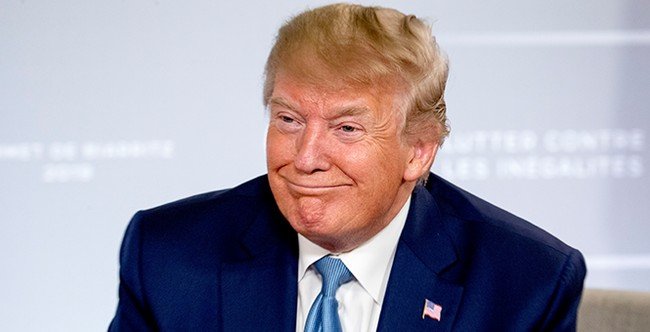
Even President Donald Trump noticed it.
“I would prefer a general election, but that is a completely different campaign” Trump said during an interview with “Fox & Friends.” “I would rather vote in a popular vote because, in my opinion, it’s a lot easier to win a popular vote.”
Trump is right, but especially if Arizona, Georgia, and even Texas become, as expected, contested states in 2020 and beyond due to demographics. Republicans simply cannot win under the current method if any of those states flip to the Democrats.
In contrast, the political map would be more favorable to Republicans in the national popular vote. In reality, the Republican candidate could lose the election in Arizona or Georgia and become president. That is not the case now.
Under the national popular vote system, Republicans have nothing to fear.