
House Speaker Nancy Pelosi (D., Calif.) warns that mail-in voting is “essential in the time of coronavirus.” In a lawsuit filed this week in Texas, Democrats argue that fear of exposure to the coronavirus requires expanded access to mail-in voting.
Last week, Democrats in Congress wanted to send additional 4 billion dollars to states to fund mail-in voting and support conduct elections. This is in addition to last month’s stimulus package, which already includes $400 million to support states conduct elections. Influential Reps. Zoe Lofgren (D-Calif.), Carolyn Maloney (D-N.Y.), Marcia Fudge (D-Ohio), Reps. Jamie Raskin (D-Md.) and Stephen Lynch (D-Mass.) issued a statement warning that public health concerns “may result in lower voter turnout.”
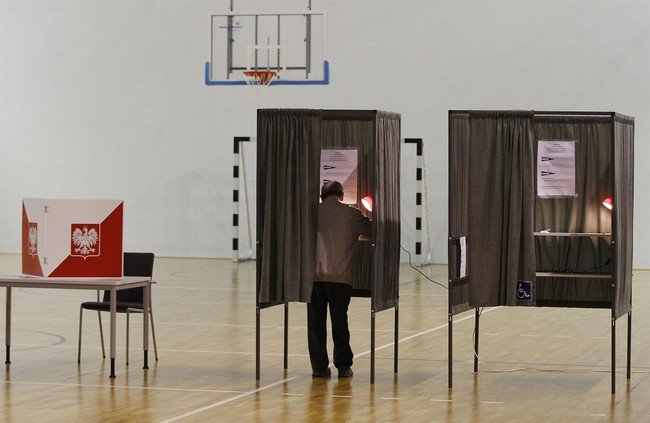
But how dangerous is in-person voting in the age of coronavirus? Unlike more than a dozen other statesIn-person voting took place in Wisconsin on April 7. Wisconsin Democrats tried and failed to change the election to mail-in only at the last minute, but the state’s Republican majority went to the state Supreme Court and kept the polls open.
The vote did not have the disastrous outcome many predicted. A full 22 days after the vote, 52 people who worked or voted in Wisconsin elections had COVID-19. Given that the average incubation period for the disease is nearly six days, it is interesting that there were only 19 such cases 14 days after the vote.
Even these numbers overestimate the number of people infected with the virus, as there is no evidence that these people became infected at the polls and not in some other way.
But even if voting caused all 52 infections, what is the infection rate? More than 1.55 million people voted in the presidential primaries, 1.0 million using absentee ballots. The number of in-person votes is higher than 550,000 because some voters did not participate in the Democratic and Republican primaries and some who sent absentee ballots showed up at precincts even though they had mailed their ballots.
There are also people working in 4050 polling stations in Wisconsin. Milwaukee’s voting districts had among others 80-100 election commission employees and 30 members of the National Guard at each location at some point during the 13 hours they were open 7 a.m. and 8 p.m.. So each location had between 110 and 130 people working. But let’s assume, conservatively, that the average polling place in Wisconsin had 50 people working there — that’s another 202,500 people at risk of exposure.
The total number of people who voted in person was therefore more than 750,000. Even assuming that none of those 52 people could have caught the virus in any other way, the infection rate was at most 0.0069 percent. In other words, 6.9 out of 1,000 people who took part fell ill. Fortunately, none of these cases were considered particularly sedate.
But the votes in Wisconsin were not feeble. 34% state’s electorate cast a ballot. In the last presidential primary in which the incumbent president ran for re-election in 2012, turnout was only 26%Average turnout in the 12 spring primaries from 2008 to 2019 was just 24%.
The dangers of in-person voting have been greatly exaggerated. The standard Democratic advice has been to never let a crisis go to waste. But the normal precautions people took to vote on April 7 seem to be protecting people. They are using people’s coronavirus to promote mail-in voting — while ignoring concerns about vote buying and fraudThere’s a reason most countries don’t allow people living abroad to vote by mail.
John R. Lott Jr. is president Crime Prevention Research Center and the author of the recent ““War on weapons.”


