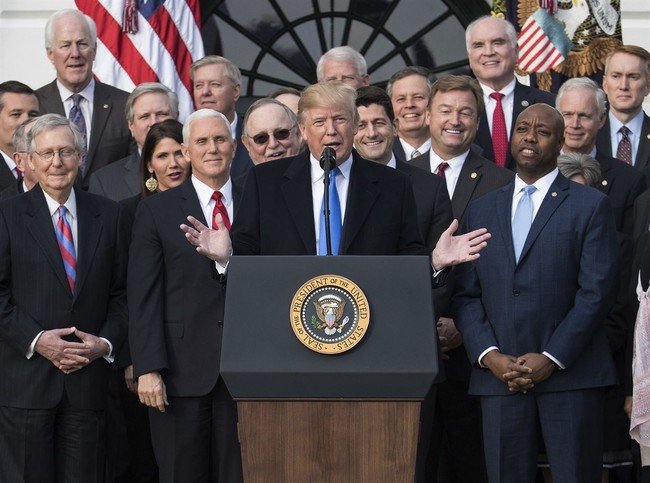
In 2016, Donald Trump easily defeated Hillary Clinton in the Buckeye State. As commentator George Will has noted, the GOP presidential strategy for a long time was to win the South, the Midwest, the West, and then spend the equivalent of Brazil’s GDP to win Ohio. There are stories that George Bush knew his second term depended on winning Ohio, which he did. Barack Obama changed all that. But public opinion changes like the tides. Trump won Florida hands down, a state that many worry about the GOP’s competitiveness in national elections because of its changing demographics. Obama’s two-term victory in Ohio also heightened those concerns. And then Trump won by eight points.
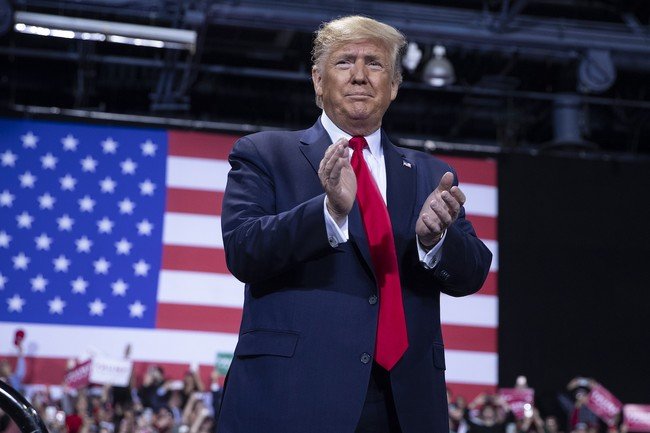
As the 2020 race heats up, President Trump is already running a tender, quasi-general election campaign, holding rallies in key swing states. He held one last night in Toledo, Ohio. Swing states are also in the news for their voters’ opposition to Democrats’ impeachment push for President Trump. There are plenty of Obama voters here who sided with Trump, some of whom voted for Obama twice. Millions of those people helped turn the tide. Because of far-left policies pushed by the left, like illegal immigrants getting health care, aggressive gun control, and Medicare for All, working people no longer see Democrats as their defenders. The list of things that make up the Democratic agenda for 2020 is tailored to the professional elites who dominate urban areas and the coasts—you won’t win an election by owning those areas.
Medicare for All is particularly deadly to Democrats because a) no one believes it can be done without tax increases on the middle class; b) it’s ruinously steep; c) it means the destruction of private health insurance. That’s over $150 million in plans, including union households. Oh yeah, before the rally, an Ohio voter said that union workers employed by Jeep are pro-Trump. That doesn’t bode well for Democrats trying to reclaim and rebuild the blue wall that ran through the Rust Belt. Last year, General Motors employee Matt Moorhead warned 2020 Democrats that he was a little nervous that some of these clowns don’t know any working people. And for that reason — union households will vote Republican. Well, with a booming economy, an unpopular impeachment, and immigration finally taking a more aggressive turn toward enforcement — it’s certainly headed that way.
WATCH: Ohio voter explains why President Trump will win Ohio again in 2020:
“These unionists in Jeep…they all support @realDonaldTrump.
“These people are angry about what the Democrats are doing, especially with impeachment.” photo: twitter.com/x6WquUxOZI
— Francis Brennan (Text TRUMP to 88022) (@FrancisBrennan) January 9, 2020
At the beginning of 2019 The Washington Post wrote a column from Mark Dawson, an expert on Ohio election statistics, who declared that the Buckeye State is Trump country. He cited other local Democratic leaders who have also come to terms with the fact that the state is now a GOP stronghold, adding that Democrats should keep that in mind when it comes to allocating resources in 2020. He also wondered whether Democrats will ever be able to reclaim it. Even with a left-wing populist like Sen. Sherrod Brown representing them, his vote share has been steadily declining since 2006. Dawson offers another warning to Democrats about Ohio. The 2018 election was a mess for the party. On paper, it should have been a good year. Instead, the GOP won the state’s elections and remains firmly in control of both houses of the state legislature:
For more than a century, Ohio has not only voted more often than any other state for the winning presidential candidate (28 of 30 times between 1896 and 2012), but has also been the closest to the national two-party average.
That streak is over. Ohio now votes like a red state. Presidential campaigns should study this trend carefully before deciding how much time — and money — to invest in the Buckeye State.
[…]
The situation is all the more surprising because 2018 was shaping up to be a good year for Ohio Democrats. Quality, well-funded candidates lined up to challenge Ohio Republicans in state elections. Democratic turnout was unusually high for a midterm election. In congressional races, Democrats received 97 percent of the votes they won in 2016 in 2018, an unusually high percentage. By comparison, Republicans received only 77 percent of the votes cast in 2016. So Ohio did have a blue wave.
[…]
After the 2018 election, Dave Betras, the Democratic Party chairman in Mahoning County, which includes Youngstown, said, “I don’t know how anyone can say that. [the state] anything but red. It used to be that a guy who showered after work, rather than before, was reliably blue, and I’m not sure that’s the case now.”
Dawson noted that immigration was the top issue for Ohio voters. And they are not open-borders supporters.