
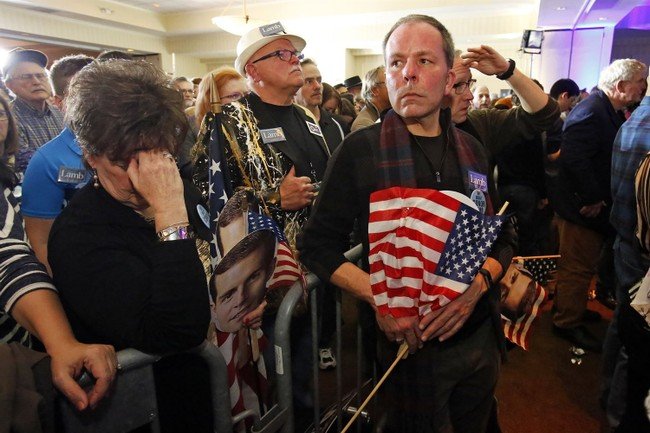
MT. LEBANON, PA. — One of Conor Lamb’s biggest advantages in his victory in the special election in western Pennsylvania’s 18th Congressional District last week was the fact that his campaign manager lives in his district.
Abby Nassif Murphy had no office on the Democratic Congressional Campaign Committee; she didn’t meet daily with fellow Beltway Democrats, who are, on average, quite progressive, both culturally and politically. She understood the pulse of the district not through polls and data but because she spent most of her time shuttling her sons to and from classes. Independent of the pressures of Washington consultants, agendas, and resistance points, she was able to respond to what she saw the community wanted.
This wasn’t a cookie-cutter operation. The ads were fresh; the messaging was sheltered; and there was no evidence of any Beltway residue in anything they did.
It was the exact opposite of what the Republicans did. Republican candidate Rick Saccone’s ads were flat, looking like holdovers from the Obama era. The messaging was negative, committing the cardinal sin of not giving voters a reason to show up for the candidate or brand.
Last December, Brad Todd, coauthor of our upcoming book The Great Revolt: Inside the Populist Coalition Reshaping American Politics, wrote for The Federalist that the only way to keep the Republican Party vigorous was to get out of D.C. and set up home base somewhere in Ohio, where it would know what its voters really want, not what it wants them to want.
Three months later, his warnings came true. The Republican Party lost, in part because it failed to understand who its voters were: a coalition of populists that exists beyond the six counties surrounding the Beltway.
He’s right. I live here in the 18th Congressional District. When I visit D.C., I’m always proud of the history and importance of the destination. But when I pass Hagerstown, Maryland, on Interstate 70, I know there’s a difference in approach to culture, religion, education, and politics between western Pennsylvania and the Beltway.
It’s not that one is better than the other. It’s that they are different. If you’re advertising or creating messaging to win over voters, you’d be better off understanding who they are, rather than demanding that they be who you need them to be.
Murphy had the advantage.
The good thing for Republicans is that November 2018 doesn’t have to be a tsunami if they learn the right lessons from their Pennsylvania special election defeat. The merger is just one of those lessons.
It wasn’t just the fault of the D.C. Republicans. Pennsylvania Republicans also have a fair share of the blame, because they nominated someone who couldn’t or wouldn’t raise the money they needed. Saccone was nominated by party insiders caught up in a vicious tribal fight.
Some of the GOP’s biggest donors have become a different kind of malicious group. Upset that their establishment candidate didn’t win, they seem to want to freeze their own majorities and hold back their money because they dislike President Trump. Meanwhile, gun-hating Democrats across the country have been giving out buckets of money to a guy who shot an AR-15 in his campaign ad. Smaller GOP donors have shown no such interest in this race.
Conor Lamb represented a throwback for Democrats. In addition to firing off guns in an ad, he ran against House Minority Leader Nancy Pelosi, didn’t oppose tariffs and insisted he supported middle-class tax cuts, with enough entitlement scare to seal the deal.
Because Murphy lives here, she knew exactly what would motivate her neighbors.
To know your voters, you have to be your voters—Democrats won it in the 2006 midterms, then blew it when they got power and went on a spending spree. Republicans won it in 2010 but missed it in 2012, when they failed to inspire a wave of voters (including those in the “47 percent”) who wanted to support someone against then-President Barack Obama.
Republicans will lose seats in 2018—a normal course of events in the first midterms of almost every president—but they don’t have to lose them all. And part of that lesson is: Get out of D.C. well before the November shooting; remind your donors what it’s like to be a party out of power; nominate good candidates that will allow national Republicans to return to their supportive role; and set up headquarters somewhere in Cleveland.


