When the term “gender gap” was coined a few decades ago, it sounded like something out of a witty, satirical movie set in the Old West. “Gender gap” came into political prominence when Ronald Reagan was elected president in 1980 with 55 percent of the male vote and just 47 percent of the female vote.
The media was fascinated by the gender gap, Republicans were concerned about it, and it was a factor in President Reagan’s decision to appoint the first woman to the U.S. Supreme Court. In 1981, Gipper got a chance to prove that he had listened to women’s complaints. When William French Smith, his attorney general, called Sandra Day O’Connor to tell her she was being considered for a federal job, she quipped, “I think you mean secretary!” When she was interviewed over lunch at her home, she impressed the men with her intelligence, intelligence, and salmon mousse salad. The rest is “herstory,” with three women on the Supreme Court.
The meaning and mechanics of the gender gap have changed dramatically since those innocent days when women first began to seek power in the boardroom as well as in the bedroom. As more and more women entered the workforce, it quickly became clear that they were creating another gap, between women with higher education and those with less. An income gap emerged that influenced divergent political and cultural attitudes. How women viewed the glass ceiling depended on whether it was hung with a crystal chandelier or a bare lightbulb.
Women have never been a monolithic mass of attitudes about anything. After the suffragettes won the election, married women voted largely the same as their husbands, ending the great fear of male chauvinism in the 1920s.
Several decades of debate among women in second-stage feminism focused on many of the divisive issues raised by feminists like Gloria Steinem and Betty Friedan, discussing whether women and men were more similar or different, more caring or more aggressive, and how families were affected by changing sexual roles. In this revolutionary war between the sexes, there were clear winners and losers (although widespread fraternization with the enemy continued unchecked), and class became a greater factor in how women voted than biology.
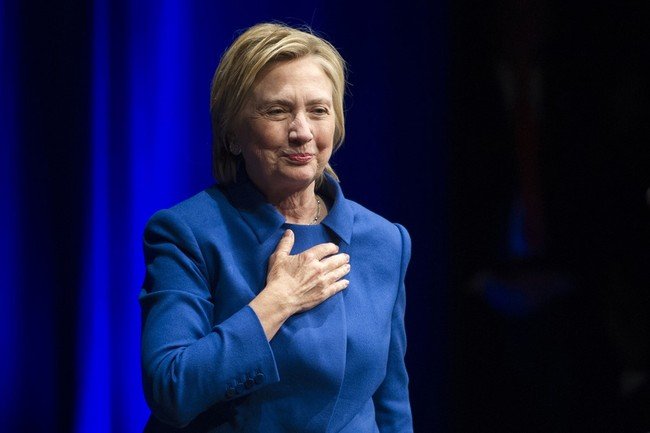
Hillary Clinton’s journey from Yale Law School to governor’s wife, president’s wife, senator, secretary of state and finally presidential candidate reflects personal and public changes in expectations for educated women. Donald Trump’s has been more of a zigzag. He is both a throwback to the 1950s man, given his rude attitudes toward women on the television series “Mad Men,” and a postmodern man, an employer of forceful women in top administrative positions. He is also a veteran of three marriages and now a family man with a wife and adult daughters and sons, all of whom are involved in his business.
Donald won and Clinton lost, and the debate over gender inequality is heating up again, this time from a unique perspective. Susan Chira in The New York Times observes, “While Democrats have historically won over some working-class white women, in this election class has emerged as a powerful and divisive force that has swung decidedly Republican. All the talk about angry white men has ignored the fact that they were married to angry white women.”
That’s why Trump won 62 percent of the vote from white women without college degrees. These women rightly believe they weren’t on Clinton’s radar because the glass ceiling wasn’t what they were looking for. Clinton won only 34 percent of their votes. These are the women who populate J.D. Vance’s bestselling memoir, Hillbilly Elegy. He grew up in Middletown, Ohio, a struggling steel mill town in the heart of the Rust Belt that went solidly for Donald Trump. The Republican nominee specifically addressed the suffering of men and women in key swing states whose votes eroded Clinton’s advantage among educated women. They heard genuine compassion in Donald’s voice as he spoke of the struggles of working-class families with addictions, broken homes, unemployment, and broken lives.
They realized that this was what Clinton had in mind when she dismissed them as the unredeemed “deplorables.” They had heard Donald talk about bringing back jobs to “Make America Great Again,” and he sounded like he could really transform hopelessness into hope. With his scratchy talk, his combative and subversive style, his combative contempt for political correctness, he sounded genuine and familiar.
To the comfortable, educated middle class, elitism sounds good, not bad. To the destitute working class—who experience the condescension and smoothness of Hollywood, Washington, and the media—“elitism” is broad and painful. So what if Donald Trump was a billionaire? He had that, and Hillary Clinton didn’t.