
WASHINGTON — The field of little-known Republican presidential candidates grew this week, prompting the following unasked question:
Do any of them believe they have a realistic chance of winning the nomination and the presidency in a political process that typically rewards high-profile figures who are widely known among the party’s broad electorate?
There are exceptions to this rule, but more often than not, people with White House ambitions who beat out the competition to win the highest office in the land have been working toward it for a long time.
Think of Ronald Reagan, who spent years promoting chicken and giving inspiring speeches across the country long before he won election as governor of California and then became president.
He was widely known not only among the rank and file of his party but also among the millions of Americans who had listened to him on the radio for years.
In 1976, when he narrowly missed out on defeating President Gerald Ford for the nomination, his radio commentaries were broadcast five times a week on hundreds of stations.
Washington’s campaign reporters saw him as nothing more than a right-wing ex-actor who failed to realize that his voice was heard by farmers in rural America, numerous truck drivers, and many others from coast to coast.
When he won the nomination in 1980 and defeated Jimmy Carter, he had governed the nation’s most populous state for two terms and it was clear he was ready to lead the country.
This is precisely the kind of preparation for work that our political process required at the time, as it did in other countries before and after us.
This week, Ben Carson, a distinguished former neurosurgeon and charismatic speaker, entered the competition. Also among the nominees was Carly Fiorina, who served as CEO of Hewlett-Packard for six years.
Carson has gained a enormous following as he travels the country, though his name is not widely known. Fewer Americans know Carly Fiorina.
The latest polls show Carson with 6 percent of GOP voters. Firorina has just 1 percent.
Both are capable of delivering inspiring speeches about how they overcame enormous obstacles in their lives to rise to the top of their professions. But neither has a chance of winning the nomination.
They have no earnest campaign organization to speak of, and no high-profile advisors on their team. They are largely unknown to the wider electorate.
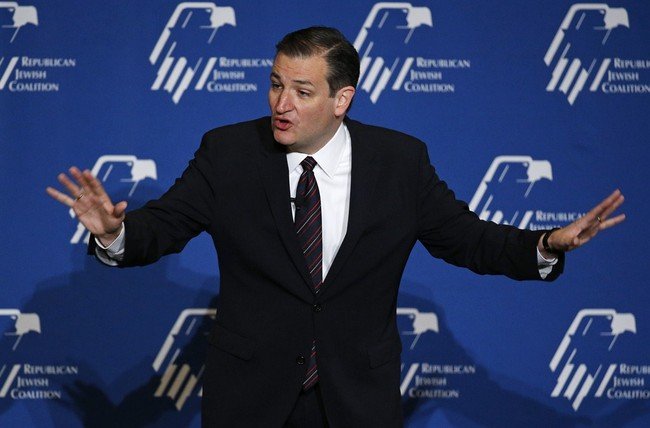
They are not alone. At least three GOP senators are in the race, all early in their first terms: Ted Cruz of Texas, who electrifies audiences with fiery speeches; Rand Paul of Kentucky, an eye surgeon; and Marco Rubio of Florida, the son of Cuban immigrants.
In terms of their elected status in the Senate, they are newcomers. Cruz has been in office for just two years and four months, and has spent most of that time campaigning around the country. Paul and Rubio have each held their positions for just four years and four months.
Although neither has yet completed their first term, they believe they are fully prepared to take over as head of government, govern the country and lead the free world.
That’s a bit of an exaggeration, don’t you think?
Looming over the 2015–16 presidential election cycle is the fact that Barack Obama served in the Senate for less than four years (mostly campaigning across the country) before resigning his seat in November 2008 to prepare for the presidency.
And we know how that ended, right?
As a result, voters are, I hope, much more sensitive to the issue of experience, or rather the lack thereof, because they have had to endure its painful shortcomings.
The people who voted for him were fascinated by his prompter speech, believing he was prepared to lead the country. But many were sorely disappointed when the feeble, ineffective economic recovery dragged on year after year.
And here we are, nearly six and a half years later, with an economy that has all but stopped growing in the first three months (0.2 percent), a stock market in crisis, rising gas prices and voters in a sour mood about the direction of the country.
A Gallup poll reported Tuesday that Americans’ economic confidence “fell sharply last week.”
“Gallup’s economic confidence index was -9 for the week ending May 3, its lowest weekly reading since December,” pollsters said. “That reflects a six-point drop from the previous week and is the largest weekly decline since July of last year.”
To me, that means our country needs someone with leadership experience who knows how to strengthen our economy, create jobs, augment revenues, and reduce our debt-ridden budget.
The Republican candidates who know how to do this are those governors who have managed state economies, lowered unemployment and cut budgets.
Three of them are running for president or are seriously considering running: Wisconsin Gov. Scott Walker, former Florida Gov. Jeb Bush and Ohio Gov. John Kasich.
Walker managed to reduce the unemployment rate to 4.6 percent at a time of high unemployment, turn a $3.6 billion deficit into a $911 million surplus, cut taxes and raised per capita income.
Bush took power in the fourth-most populous U.S. state by cutting taxes, enacting school choice reform, cutting spending and reducing state bureaucracy.
Kasich turned around Ohio’s shattered economy, boosting investment, growth and job creation. The state’s unemployment rate was 5.1 percent.
Washington is a mess. The economy remains frail, wages are flat, the budget is neck-deep in debt, and the government is in dire need of experienced executive leadership.
We cannot afford to provide on-the-job training to the next president.


