
“The president believes the world will be a better place if all borders are removed – from a trade perspective, from a development perspective and from a welcoming perspective of people from other cultures and countries.”
That’s a paraphrase of a speech that former President Bill Clinton gave just months after leaving office, on September 10, 2001, in Melbourne, Australia. There’s apparently no transcript; the quote comes from the businessman who hosted the forum, and it appeared in a Melbourne newspaper article the next day, which, thanks to time zone differences, was about 12 hours before the planes hit the World Trade Center towers.
These words are an compelling indicator of the general attitude, the prevailing sentiment that is largely taken for granted not only by Democrats and Americans like Clinton but also by elite leaders of many parties in developed democracies around the world.
Let’s call it Lennonism, after John Lennon’s words in “Imagine.” “Imagine there are no countries,” Lennon sang. “There’s nothing to kill or die for. … Imagine all the people living in peace. … And the world will be one.” It’s an appealing vision, but perhaps an odd one for someone born, as Lennon was, in a time and place when the Battle of Britain was raging in the sky.
Today, 15 years after Clinton’s Melbourne speech, Lennonism is still the creed of many elite leaders, but voters have solemn problems with it.
Examples A and B are the so-called comprehensive immigration reform legislation supported by both George W. Bush and Barack Obama, and the campaign to keep Britain in the European Union led by Prime Minister David Cameron. Both failed.
A key provision of the immigration bills was to legalize many or most of the estimated 11 to 12 million undocumented immigrants in the United States (according to the Pew Research Center) before border and labor enforcement laws could take effect. There were bipartisan political motives for doing so.
Democrats supported it because they figured most illegal immigrants would vote for their party. Many Republicans, especially Bush, supported it because they didn’t want Texas and Florida to follow in California’s footsteps—where the immigrant vote seemed to safely make a Republican-leaning state Democratic.
Both ignore the fact that many voters believe that borders and laws should mean what they say. American citizenship should be reserved, they believe, for those willing to obey American laws. Legalizing the status of illegal immigrants without providing for future enforcement, they argue persuasively, would encourage further waves of illegal immigration.
Barack Obama’s Lennonist actions and Hillary Clinton’s campaign rhetoric support this view. Obama, in an executive order that is currently being blocked in federal courts, took steps to legalize 5 million undocumented immigrants.
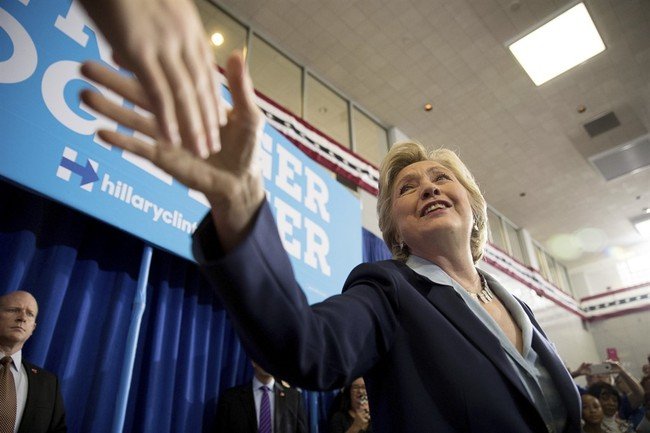
Clinton has suggested that she will legalize millions of illegal immigrants and not deport any immigrants who have broken no laws except immigration laws. She clearly did not reject her campaign tweet in Ohio, in response to Donald Trump’s statement that “no one has the right to immigrate to this country”: “We disagree.” This is pure Lennonism – without borders.
Current polls suggest he’ll likely win in November. But comprehensive immigration legislation still looks doomed. Most Americans don’t want to see all borders abolished.
British Prime Minister Cameron, who, like the Clintons and Bushes, came from elite universities, has set himself the goal of persuading British voters to accept the status quo, in which unelected European Union committees and courts could overturn British laws and force Parliament to pass unwanted legislation.
Cameron and the financial elite have made dire predictions that Brexit – leaving the EU – will damage the UK economy. They have acknowledged that EU dictates can be irritating, but they have implicitly accepted that the EU leaders’ goal of “ever closer union” is inevitable.
Fifty-two per cent of a record turnout of British voters thought otherwise. Almost everywhere, outside inner London and Scotland, a majority voted to take an economic risk – which now seems greatly exaggerated – and hand control of Britain’s borders to elected representatives. Cameron resigned and was replaced by Theresa May, who opposed leaving the EU but now says that “Brexit means Brexit”.
The UK vote went ahead despite Obama’s urgings and his threats that the UK would be “at the back of the queue” if it ignored his advice.
Obama believes that “the arc of history” is bending in a Lennonian direction. It would be nice if it were. But the continuing terrorist attacks since the day after Bill Clinton’s Melbourne speech, like the bombings of Britain when John Lennon was born, leave plenty of reason to doubt that the world is ready to “live as one.”


