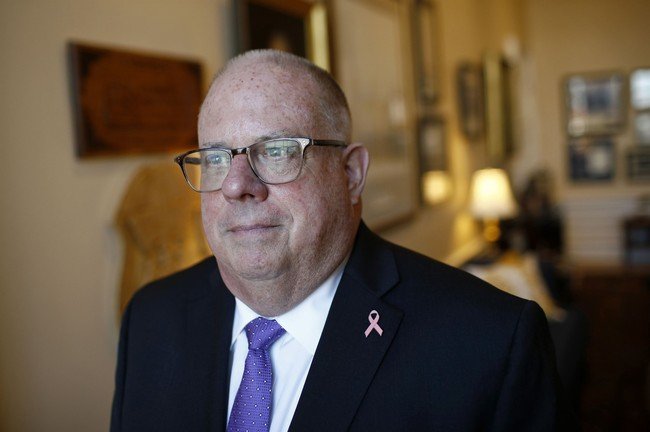
During his primary campaign, Kevin Coughlin – currently the GOP candidate for Ohio’s 13th Congressional District – pledged to pursue entitlement reform if elected.
“And I know Democrats are cheering now when they hear me say it,” Coughlin said. He claimed that “anyone with eyes and an honest heart” could understand a elementary mathematical problem – money disappears faster than it is replaced. Coughlin wants to address waste, fraud and abuse to close the gap rather than cut benefits. But independent experts doubt there has been enough mismanagement in the programs to balance the books.
Coughlin specifically addressed Social Security and Medicaid, which provide health care to lower-income people. But Medicare, which provides health care for seniors and some people with disabilities, is typically included in entitlement reform debates.
Last forecasts of the US Treasury Department indicate that the Social Security and Medicare trust funds will become insolvent in 2034 and 2031, respectively.
“(They) will go bankrupt very, very quickly, which doesn’t mean (the programs) will go away, but it will mean that the benefits that people get will be limited,” Coughlin argued.
“You have to start thinking about the sustainability of these programs for the people who really need them,” he continued. “That is why there must be real adult conversations about these issues and proposals put forward with binding votes that Congress can vote on.”
Coughlin’s argument is consistent with decades of Republican doctrine, but perhaps not consistent with the party’s current banner.
“I promised I would always pay my Social Security and Medicare taxes – we would always keep them and we would not cut them,” former President Donald Trump told attendees at rallies in Dayton last March.
Despite insisting from his early days as a presidential candidate that he would “save” the three large entitlement programs, “no cuts“” Last month, in an interview with CNBC, Trump said that “a lot can be done in terms of entitlements and cuts.” He suggested cuts also in 2020.
Where the Republicans stand
While Trump is hesitant on the issue, Coughlin sincerely stands by his position. In 2011, when he was flirting with a run for the U.S. Senate, he presented a similar case. Coughlin expressed support for several ideas endorsed by U.S. Rep. Paul Ryan, R-WI, who was elected as Mitt Romney’s vice presidential pick and then became House speaker during the Trump administration.
These changes include turning Medicare into a voucher program for anyone under age 55 at the time. Proposal as well continually raise the eligibility age to 67 — a position that Coughlin currently opposes. Coughlin too declared support for a balanced budget proposal that would reduce spending in such a way that cuts to Medicare and Social Security would likely be unavoidable.
In a written statement for this story, Coughlin blamed Democrats for program balances and expressed concerns that they would “resort to benefit cuts” to address the shortfalls.
“These important programs are going bankrupt because Democrats have used them as a personal piggy bank and raided them for wasteful spending and side projects,” he wrote. “We need to strengthen these programs by reducing waste fraud and abuse, not by cutting benefits, raising taxes or the retirement age.”
Trump also used waste fraud and abuse as a fig leaf after backlash to his public comments. But during independent experts say waste and fraud are stern problems in Medicaid and Medicare, they question whether there’s enough to balance the books. In the case of Social Security, they insist that eliminating waste and fraud will do little to close the gap. In another version of this math problem, they note that there are simply too many retirees and too few workers.
Couhglin is not alone in raising the idea of entitlement reform.
At the beginning of this year’s U.S. Senate race, all three Ohio Republican Party candidates supported changes to eligibility.
State Sen. Matt Dolan, R-Chagrin Falls, was the most blunt. “To have a discussion about spending,” he said, “yes, we have to acknowledge that we need to reform these powers.” Dolan urged none of the participants to “sweat” over losing benefits. “But look at the front table here,” he added, “do you see these juvenile people? I want to make sure they’re not afraid.”
knot. of State Frank LaRose said Social Security and Medicaid are “worth a look” but cautioned that the changes must ensure they don’t impact people decades after they become beneficiaries. Bernie Moreno, who ultimately won the nomination, insisted that Social Security was not a right because workers contributed to the program, but he criticized the expansion of Medicaid.
In a written statement, Moreno’s campaign reiterated his commitment to opposing cuts to Medicare and Social Security. “Important programs that Americans have paid into throughout their lives, like Social Security and Medicare, should never be at risk,” he argued. Moreno added that he does not support cutting Medicaid for Americans who are “truly in need,” but criticized states such as California that have extended benefits to undocumented immigrants.
“Which we need to put an end to immediately,” he said. “The American taxpayer will finally foot the bill.”
Entitlement reform plans in black and white
While Coughlin highlights waste fraud and abuse, incumbent lawmakers have unveiled plans for broader phase-outs in recent years. They just failed to gain traction.
Recall that President Joe Biden teased Republicans during the 2023 State of the Union address about plans to phase out Medicare and Social Security. Despite the derision of some Republicans, the idea came from here Platform presented by U.S. Sen. Rick Scott, R-FL. Is from corrected the application to disable programs.
Most recently, the Republican Study Committee presented the budget plan for 2024 which proposes raising the Social Security eligibility age without specifying a qualifying age and turning Medicare into a voucher system. Eight members Ohio’s congressional delegation are part of the committee.
What changes would mean in Ohio
“Well, the real question is whether we are our brothers’ keeper or not,” said Jack Frech, retired director of the Athens County Department of Work and Family Services.
After more than thirty years of service, he served as director-in-residence on poverty at the Voinovich School at Ohio University.
“And you know it’s interesting that we’re very selective about the math,” Frech said of arguments about the solvency of entitlement programs. “We could also look at the fact that at the same time, the richest people in this country have become absurdly richer.”
“You know, this is math too,” he said.
And while he acknowledged that Republicans have put a lot of effort into limiting entitlement programs, Democrats are not blameless.
“Let’s remember that on issues like cash aid and some of the other programs, it was Bill Clinton and the Democrats who made the reforms that ultimately led to drastic, drastic reductions in aid under those programs,” he said.
“It’s not like there’s anyone who deserves a gold star for the great job they’ve done helping poor people,” Frech said.
He explained that programs like Social Security and Medicare provide lifelines for Ohioans, but they do not provide a comfortable life. The average monthly Social Security check is about $1,900. The poverty line for an individual is $1,255 per month.
But the impact doesn’t stop with individuals, he said. “I looked at communities in southeastern Ohio where as much as 70-80% of medical revenue comes from these programs.” He also noted that in some southeastern Ohio counties, transfer payments account for as much as a quarter of local revenues.
“These are real people who are already struggling,” Frech said, “and you are basically saying we will solve our financial problem by taking away their services.”
Follow the OCJ reporter Nick Evans on Twitter.