TOLEDO, Ohio – At the heart of who United Auto Workers union members are and what they want are three very American concepts: pride in their work, the ability to navigate an economy that is working against them, and a strong-armed government for a prosperous and secure future away from them and their communities.
As CNBC’s Brian Sullivan succinctly said after his visit to a Detroit picket line 60 miles from the GMO plant, UAW workers are “proud of their work and their role in American manufacturing,” burdened by “the inflation of the last few years that is crushing them” and ” “They fear what they see as DC’s largely coercive electric vehicle (EV) mandate.”
On Wednesday, a month-long strike against all of the “Big Three” U.S. automakers (Ford, General Motors, Stellantis) intensified as more than 8,000 auto workers walked off the job at a Ford Motor Company truck plant in Kentucky, their most profitable plant . It was a move that no one expected and one that will likely have the biggest impact on the historic strike.
UAW President Shawn Fain said in a press release as auto workers walked off the job: “We have been crystal clear and have waited long enough, but Ford has not received the message. It’s time for a fair deal with Ford and the rest of the Big Three, if they can’t understand that, it will help them understand after four weeks of the 8,700-worker shutdown of this hugely profitable plant.”
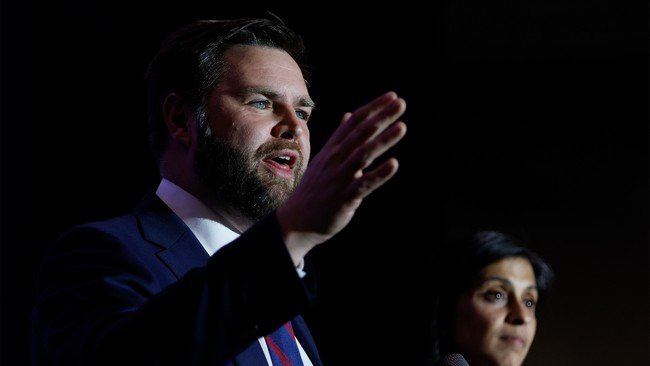
Last week, Sen. J.D. Vance, a Republican who grew up in Middletown, Ohio, visited members of the Toledo Jeep Assembly Complex who have been picketing since the strike began in September.
Vance said it was a no-brainer for him to show up and support workers here in Ohio, given his roots in Middletown. His grandparents left Jackson, Kentucky in the 1940s in search of a better life and the opportunity to fulfill the American dream when his Papaw found work at the Armco steel mill, which eventually became AK Steel.
By the time Vance was born in 1984, Middletown was on the verge of going from a flourishing industrial city with a flourishing business district that had boomed from the opening of the steel mill to the beginning of free fall. By the time Vance was a teenager, the massive four-story, 55,000-foot building and city had fallen into ruin. They were no longer where thousands of people worked, and in response, the business district began to close and families moved away.
Vance said watching his hometown decline and his community suffer under the weight of corporate greed shaped his worldview.
Vance told reporters on the picket line that it was vital to be here to hear their stories. The stories he found were strikingly similar to those he heard growing up in a steel town, on the verge of a breakdown among workers who feared they would be excluded by trade deals or replaced by automation.
“I talked to a woman who moved from a facility in Illinois that closed about a year and a half ago. Now he works here and fights for survival. I was talking to a guy who has three kids, and that hits me hard because I have three little kids myself and I’m worried about having to pay for my kids to play league baseball,” Vance said, adding: “If you work 60, 70 hours a week, you shouldn’t worry paying for a baseball league for your kids. You should be able to provide a good life for your family.”
Vance said it’s vital to show up and support employees, but it’s even more vital to take the stories you hear and apply them to your work in Washington.
Vance said the UAW workers’ message was quite straightforward. “Ten years ago the car industry was in crisis; they took it on the chin and accepted lower wages so that the industry could prosper. Now that the industry is thriving, it’s only fair that we share some of the profits and I think that’s completely reasonable.”
Vance said that most of the people he talked to on pickets said they couldn’t afford the cars they were making: “I’ve heard from a lot of people who are struggling to get by working 60, 70 hours a week, that’s not in the order in this country… it is a failure of Washington,” he said.
“I was raised by a union steelworker who earned enough to buy a good American car. I’ve talked to several people who worry that every time they dare to speak up in their own workplace, the company threatens to move their job to Mexico. What is wrong with our country that when workers actually speak up, we threaten to move their jobs to Mexico. It’s shameful,” he said.
As for Washington, Vance said the most he could take to the U.S. Capitol was a resolution that would benefit workers and that the strike must end.
“This is obviously economically devastating. This is devastating for workers. This is devastating for the wider community. I think the message I can send to Washington is: Look, this can end. The automotive industry is doing well. I just need to give the employees a fair shake.”
Before Wednesday’s strike at Louisville, Ford’s largest plant and one of the largest auto plants in the world, the union excluded Ford plants as pop-up strikes expanded after Ford indicated it was committed to reaching an agreement with the UAW.
Ford held nothing back in a statement, claiming the UAW’s move was “grossly irresponsible but not surprising” and insisting he made an offer to the UAW that showed a “positive difference” for their members.