When Republicans who oppose federal marijuana prohibition vote against a legalization bill, you’re probably doing something wrong. That’s what happened last week when the House of Representatives approved the Marijuana Opportunity Reinvestment and Expungement (MORE) Act by a 220-204 vote.
217 Democrats said “yes,” but only three Republicans responded, two fewer than voted for the MORE Act when the House passed it in 2020. The modest and waning GOP support for the bill suggests that Democrats want credit for trying to legalize marijuana, but actually they are not interested in building the bipartisan coalition necessary to achieve this goal.
The 2020 vote marked the first time that either chamber of Congress approved legislation to remove marijuana from the list of federally prohibited drugs. However, as expected, the MORE Act failed to gain any traction in the Republican-controlled Senate.
The Senate is currently evenly divided between the two parties, with Democratic control dependent on Vice President Kamala Harris’s tie-breaking vote. So even if Democrats unanimously supported a legalization bill, they would still need the support of 10 Republicans to overcome a filibuster.
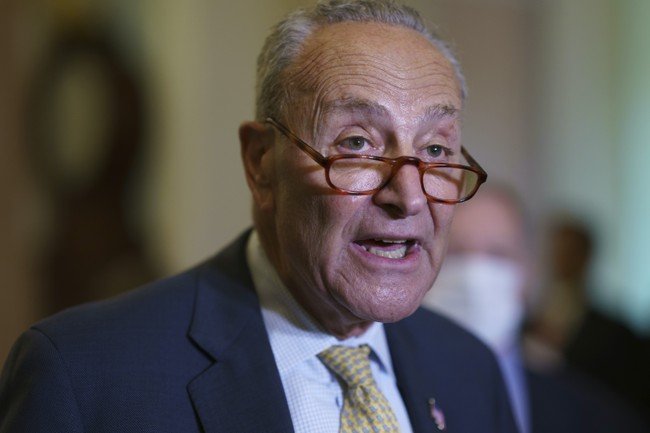
Democrats seem determined to ignore this political reality. Both the MORE Act and the legalization bill that Senate Majority Leader Chuck Schumer (R-N.Y.) plans to introduce this spring contain unnecessarily controversial provisions that are sure to discourage Republicans who would otherwise be willing to resolve an unsustainable conflict between federal prohibition and laws allowing medical or recreational employ of cannabis in 37 states.
According to the latest Gallup poll, 68% of Americans believe marijuana should be legal, including 83% of Democrats and 50% of Republicans. Even Republicans who don’t like the idea should be able to support legislation that would allow states to set their own marijuana rules without federal interference.
Such legislation may be basic. The Respect State Marijuana Laws Act of 2017, sponsored by then-Rep. Dana Rohrabacher (R-Calif.) consisted of a one-sentence bill stating that the federal marijuana prohibition would not apply to conduct permitted under state law. The 46 co-sponsors included 14 Republicans, 11 more than those who voted for the MORE Act last week.
The Common Sense Cannabis Reform Act, which Republican Dave Joyce (R-Ohio) introduced last May, is 14 pages long. So far, it has just eight co-sponsors, including four Republicans, but that still means it has more GOP support than Democrats have managed to garner for the 92-page MORE Act, which includes modern taxes, regulations and spending programs.
Representative Thomas Massie (Kentucky) believes that Congress should never have banned marijuana because it lacked the constitutional authority to do so. Nevertheless, he voted against the MORE Act, objecting to the “new marijuana crimes” its tax and regulatory provisions would create, with each violation punishable by up to five years in prison and a $10,000 fine.
Schumer’s 163-page draft bill highlights the overly prescriptive and burdensome approach of the MORE Act. In addition to often high state and local taxes, he would impose a 25% federal excise tax, impose picayune-style federal regulations and create “social equity” programs that would put even Rep. Matt Gaetz (Florida) on hold. MORE The Act’s only Republican co-sponsor.
GOP support for marijuana federalism is clear from the fact that in April, 106 Republicans voted for the Safe and Fair Law Enforcement (SAFE) Banking Act, which would protect financial institutions serving state-licensed marijuana businesses from federal prosecution, forfeiture, and penalties regulatory. The SAFE Banking Act would already be in effect if it had not been blocked by Schumer, who insisted that his own bill be a priority.
Instead of banking on Republican appetite to let states go their own way on the issue, Schumer is effectively telling GOP senators that their views don’t matter. This only makes sense if he is more interested in scoring political points than in reversing a morally, scientifically and constitutionally bankrupt policy that should have been abandoned long ago.